
It’s 2026, and one of the most memorable quirks of Respawn’s 2023 hit Star Wars Jedi: Survivor still sparks lively debates among players. Picture this: you are Cal Kestis, a Jedi Knight trying to rebuild his life on the dusty, Western-inspired planet of Koboh. The morning sun glints off your lightsaber as you set out on another adventure. Suddenly, a pack of small, feathered creatures rushes toward you, their bodies outlined in an angry red glow. These are Rawka—aptly nicknamed ‘rushers’ by locals—and they have a single, suicidal mission: to headbutt your ankles until you fall over. With no block option available, your only practical response is to slice them cleanly in half with your elegant weapon. The halves fall limp to the ground, cauterized and bloodless but undeniably violent. Cal doesn’t flinch; he just sheathes his blade and moves on, probably to pet a giant Nekko a few meters later. So, the question arises: is Cal Kestis a secret sociopath, or is this just video game logic at its most absurd?
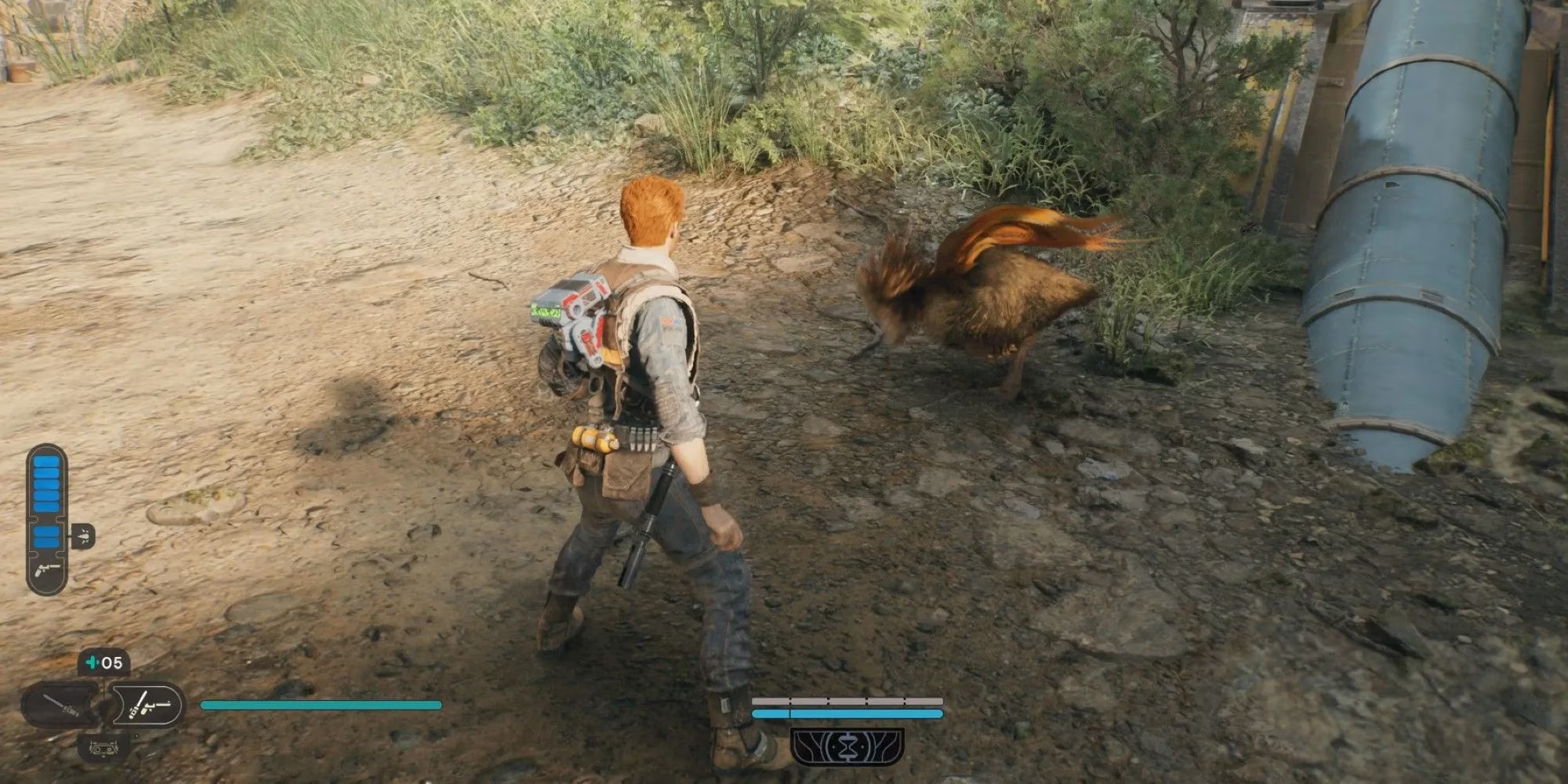
Anyone who played the game in the last few years will remember the Rawka headache vividly. These obnoxious little birds travel in packs and launch unblockable attacks the moment they spot Cal. The red glow forces you to dodge, pull them via the Force, or deliver a decisive slash before they land. When you do, the vertical cut splits them symmetrically down the middle—a visual that is both comically neat and disturbingly cold. There’s no gore, thanks to the lightsaber’s cauterizing heat, but the casual dismemberment of a creature that could have been a charming critter feels jarring. It’s like the mischievous cuckoos in The Legend of Zelda suddenly lost their plot armor and faced a swordsman with zero patience.
The oddity deepens when you consider how other animals on Koboh are treated. Early on, you learn to wall jump by observing Boglings, and you get around the map by hopping onto a Nekko, which is essentially a big, rideable chicken. Cal affectionately pats these towering feathered friends, yet he butchers their smaller cousins without a second thought. This creates a hilarious hierarchical dissonance—what gamers have jokingly called the “Goofy/Pluto problem” of the Star Wars universe. Why is one bird a beloved companion while another is just future nuggets? The game never addresses this, leaving Cal looking like a man who draws an arbitrary line at knee height. If a creature is small enough to rush his shins, it’s dinner; if it can be saddled, it’s a saint.
So why does this not cause massive backlash? After all, we’ve spent nearly two decades debating ludonarrative dissonance—the disconnect between a protagonist’s narrative personality and their gameplay actions. Nathan Drake was called a mass murderer; Lara Croft cried over her first kill then mowed down hundreds. In Jedi: Survivor, Cal is supposed to be a compassionate, slightly broken hero, yet he leaves piles of sliced Rawka in his wake. The secret lies in the birds’ sheer irritation factor. Respawn designed them to be relentlessly annoying. They attack in small swarms, chip away at health, and rarely give you a moment to breathe. Once you Force-pull one and cut it midair, its buddies are already charging while your Force meter refills. The payoff for destroying them is immediate relief, not guilt. In fact, many players started actively hunting Rawka just to clear an area, finding a strange satisfaction in the efficient, two-half disposal. It’s a classic case of “if you make the enemy obnoxious enough, nobody will fight for its rights.”
This design choice also highlights a practical truth of action games: you need a steady stream of antagonists to keep gameplay engaging, but not all foes can be evil stormtroopers. Wildlife fills the gap perfectly, especially if it’s imbued with just enough personality to feel alive but not enough to be sympathetic. Compare the Rawka to the gentle Shyyyo bird from Jedi: Fallen Order—that creature was majestic and helpful, so you’d never dream of attacking it. The Rawka, by contrast, exists in a sweet spot of annoyance: it’s a threat that justifies self-defense, yet its cartoonish aggression lets you laugh at the carnage. Imagine a version where Rawka were timid, fluffy creatures that ran away. Suddenly, every kill would feel like bullying, and Cal’s silence would be unbearable. Respawn dodged that bullet by making the birds the aggressors every single time.
It’s worth asking: could the game have handled this differently? Perhaps a non-lethal option, like Force-pushing them into a sleepy heap, would have aligned more closely with Jedi values. But then what would be the point of a lightsaber if not to hilariously bisect pests? The weapon is iconic for a reason, and Jedi: Survivor leans into the power fantasy. Cal’s emotionless reaction might even be interpreted as a deliberate character note—a Jedi trained to compartmentalize during combat. Still, it’s comical to see him collect seeds, tend a rooftop garden, and then methodically chop up the local poultry population. That contrast has become a running joke in the community, with fans crafting memes of Cal as a secret fried chicken entrepreneur on Koboh.
As of 2026, the Rawka remain a beloved punchline in Jedi: Survivor discussions. They encapsulate that weird space where gameplay necessity and storytelling clash, and the result is more entertaining than damaging. Next time you boot up the game, pay attention to the sheer number of bird carcasses you leave behind. Do you feel a twinge of remorse, or are you already fishing for the next pack to obliterate? If it’s the latter, congratulations—you’ve fully embraced the dirty job the galaxy has assigned to you. And don’t worry: Cal will still have plenty of time to hug his Nekko afterward, proving that even in a galaxy far, far away, some birds are simply more equal than others.
Comments