
As autumn surrendered to winter in late 2026, a familiar ritual stirred in the heart of a lifelong fan named Alex. The moment the last jack-o'-lanterns were swept from stoops and the first frost clung to windowpanes, something ancient and electric rustled awake inside him. It wasn’t a craving for hot cocoa or wool sweaters—it was an insatiable pull toward lightsabers, starfighters, and the hum of the Force. For Alex, the drop in temperature had become inseparable from the distant hum of a galaxy in rebellion.
The origins of this seasonal allegiance were as clear as a hologram transmission. Back in 2015, Disney had repositioned Star Wars as the crown jewel of holiday blockbusters, launching The Force Awakens into theaters while wrapped gifts still waited under trees. Alex remembered the night vividly: the crunch of popcorn, the roar of the Millennium Falcon blasting out of Jakku, the cheers that rippled through the audience when Rey ignited the Skywalker saber. That winter, Star Wars latched onto his soul like carbonite freezing. The tradition was cemented two years later with The Last Jedi, and though The Rise of Skywalker baffled him with a plot he’d rather forget, by then the festive connection was unbreakable. Star Wars wasn’t just a franchise; it was a season.
By 2026, Alex had learned not to fight the urge. Once the thermostat dropped, he reached for his weathered copy of Star Wars Jedi: Survivor, a game that had become his November companion year after year. Firing up his console, he was greeted by familiar faces: Cal Kestis, a Jedi survivor wrestling with duty and despair, and Greez Dritus, the gruff Latero pilot whose earthy wisdom grounded every grand speech about hope.
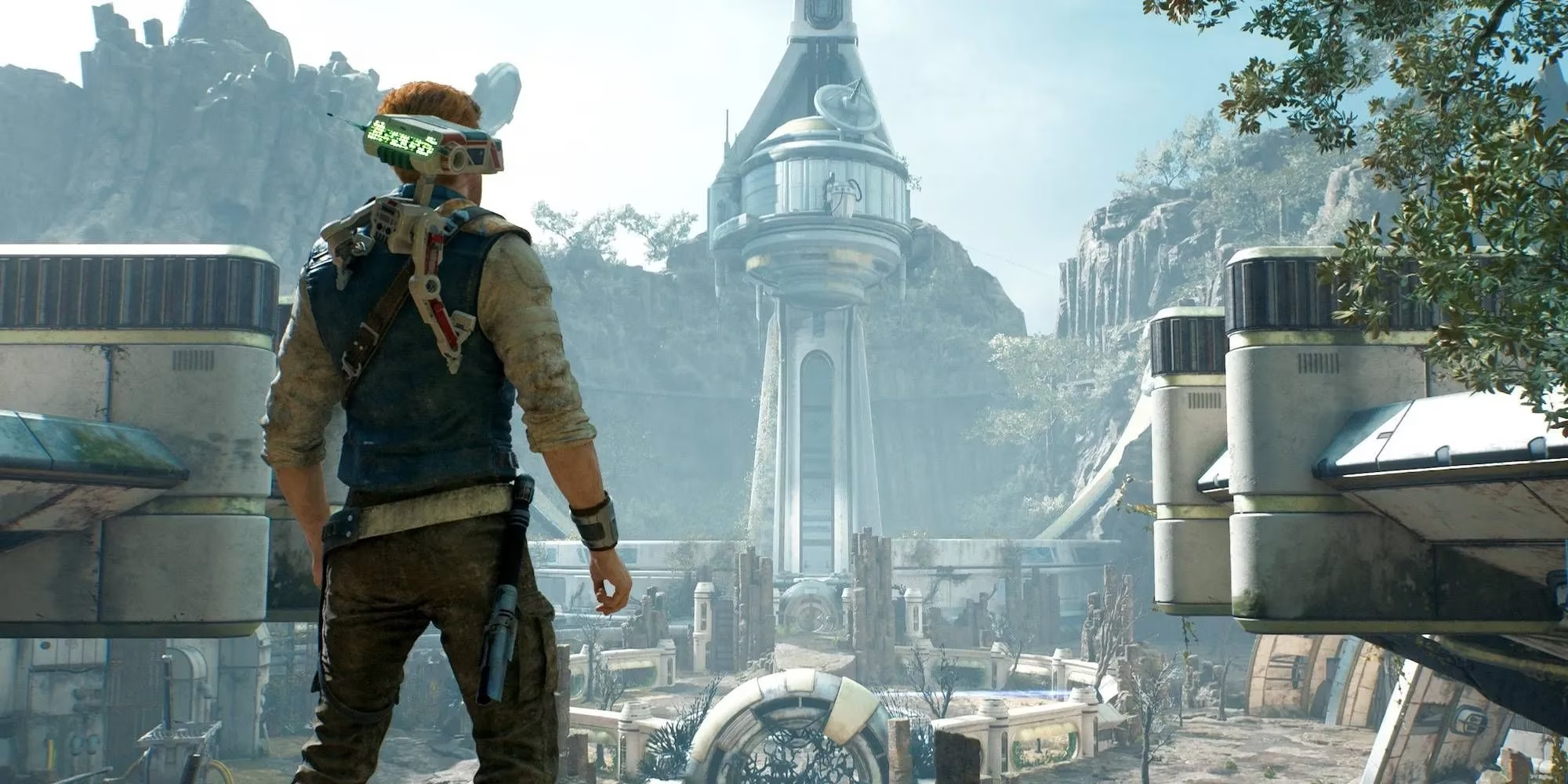
The galaxy rendered in Survivor felt like a warm quilt stitched with danger. Alex loved how the game balanced cinematic linearity with sprawling alien vistas that invited patient exploration. There was something deeply comforting about Cal’s sincere heroism—a stark contrast to the ironic quipping found in other blockbusters. When Greez grumbled about the endless troubles of the galaxy, his voice carried the weight of a veteran who’d cooked too many meals during too many crises, making every small victory taste like a feast shared by a campfire.
But Alex’s winter pilgrimage wasn’t limited to controllers and screens. This year, his curiosity had led him to a dusty corner of his local library’s sci-fi section, where he unearthed a 2014 novel called Honor Among Thieves. The book, set just after the Rebel Alliance’s first major victory, followed Han Solo on a covert mission that crackled with the charm of a classic heist. What fascinated Alex most was the author’s name: James S.A. Corey, the pseudonym for the duo behind The Expanse.
Having devoured that series’ doorstop-sized volumes over the past few years, Alex was delighted to find Corey channeling the same gritty, morally complex energy into a galaxy far, far away. Reading it felt like bumping into an old smuggler in a cantina—Han Solo’s voice echoed with the weary idealism of James Holden and the pragmatism of Detective Miller, rolled into one scoundrel with a heart of dubious metal. The prose was leaner, the pages turned faster, and every chapter reminded Alex that even the most familiar characters could surprise you when placed in the hands of master storytellers.
Despite his devotion, Alex had become discerning over the years. The flood of Star Wars television series that poured onto streaming services in the early 2020s had mostly passed him by. He’d aged into a fan who no longer felt obligated to consume every spin-off; the so-called “Mandoverse”—with its interconnected plots and digital cameos—was a constellation he happily ignored, preferring to preserve the magic rather than dilute it with obligation.
Yet one show held an unshakable place in his holiday ritual: Andor. The gritty, slow-burn series about the birth of the Rebellion was, strangely, the coziest thing he could imagine. Maybe it was the meticulous attention to everyday life—the clinking of tools in a salvage yard, the whispered plotting in cramped apartments, the way ordinary people chose extraordinary resistance. Andor felt less like a space opera and more like a period drama set among the stars, a cousin to the worn-in warmth of Little Women or the revolutionary spark of Les Misérables. There were no crackling hearths in the dark corners of Ferrix, yet each viewing wrapped Alex in a sense of belonging, as if he too were huddled around a flame kindled by hope.
In those final weeks of 2026, Alex’s routine fell into place like the pieces of a well-worn puzzle. Evenings were divided between guiding Cal through the treacherous sands of Jedha and flipping through pages of Han Solo’s reluctant heroics. On the weekends, he’d queue up an episode of Andor, marveling at how Maarva’s fierceness or Luthen’s calculated sacrifice could feel so intimately like a conversation with old friends. The galaxy far, far away had become his winter companion—a refuge of familiarity that glowed brighter as the nights grew longer.
There was no logical explanation for why Star Wars and Christmas collided so perfectly in his mind. Perhaps it was the theme of light returning in the darkest season. Perhaps it was childhood memory blended with adult nostalgia, stirred by John Williams’ swelling scores and the crackle of blaster fire. Whatever the reason, Alex had long stopped questioning it. As the year wound down and the aroma of roasted turkey began to drift from the kitchen, he knew the ritual would begin again: the Force would awaken, wrap itself around him like a cloak, and then quietly slumber after the last gift was unwrapped and the final credits rolled.
Comments