
In the vast, sprawling galaxy of Star Wars video games, the humble lightsaber often gets lost in the cosmic noise of Force pushes and blaster bolts. But oh, let's rewind the holocron a tick—remember the good old days of Fallen Order? That game, bless its heart, was like a wide-eyed Padawan: rough around the edges, sure, but it absolutely nailed the feeling. The moment you first ignited Cal Kestis's broken saber, a weapon humming with the ghosts of the Jedi Purge, it wasn't just a tool; it was a character, a statement, a piece of your soul screaming in blue plasma. Fast forward to the sequel, Star Wars Jedi: Survivor, and something fundamental got misplaced in the cargo hold. The sequel blossomed, expanded, gave us more planets, more stances, more everything... but in doing so, it kinda let the lightsaber's soul flicker and fade into the background. Talk about a glow-down!
The Stance Avalanche: When More Really Means Less
Survivor's big gameplay sell was choice. Five—count 'em, five—different lightsaber stances, from the classic single blade to the wild crossguard. You could equip two at a time, swapping on the fly like a galactic fashionista. On paper, it sounds like a dream! More options, more playstyles, more fun, right? Well... not exactly. Here’s the kicker: by making the lightsaber so... customizable, so interchangeable, Survivor accidentally made it feel trivial. It became just another piece of gear in Cal's utility belt, rather than the legendary weapon of the Jedi.
Think about it:
-
Single Blade: The elegant, all-rounder classic.
-
Dual Wield: For the aggressive, flurry-focused player.
-
Double-Bladed: Perfect for crowd control, a spinning menace.
-
Blaster Stance: Wait, a blaster? Hold up...
-
Crossguard Stance: Slow, powerful, for the patient duelist.
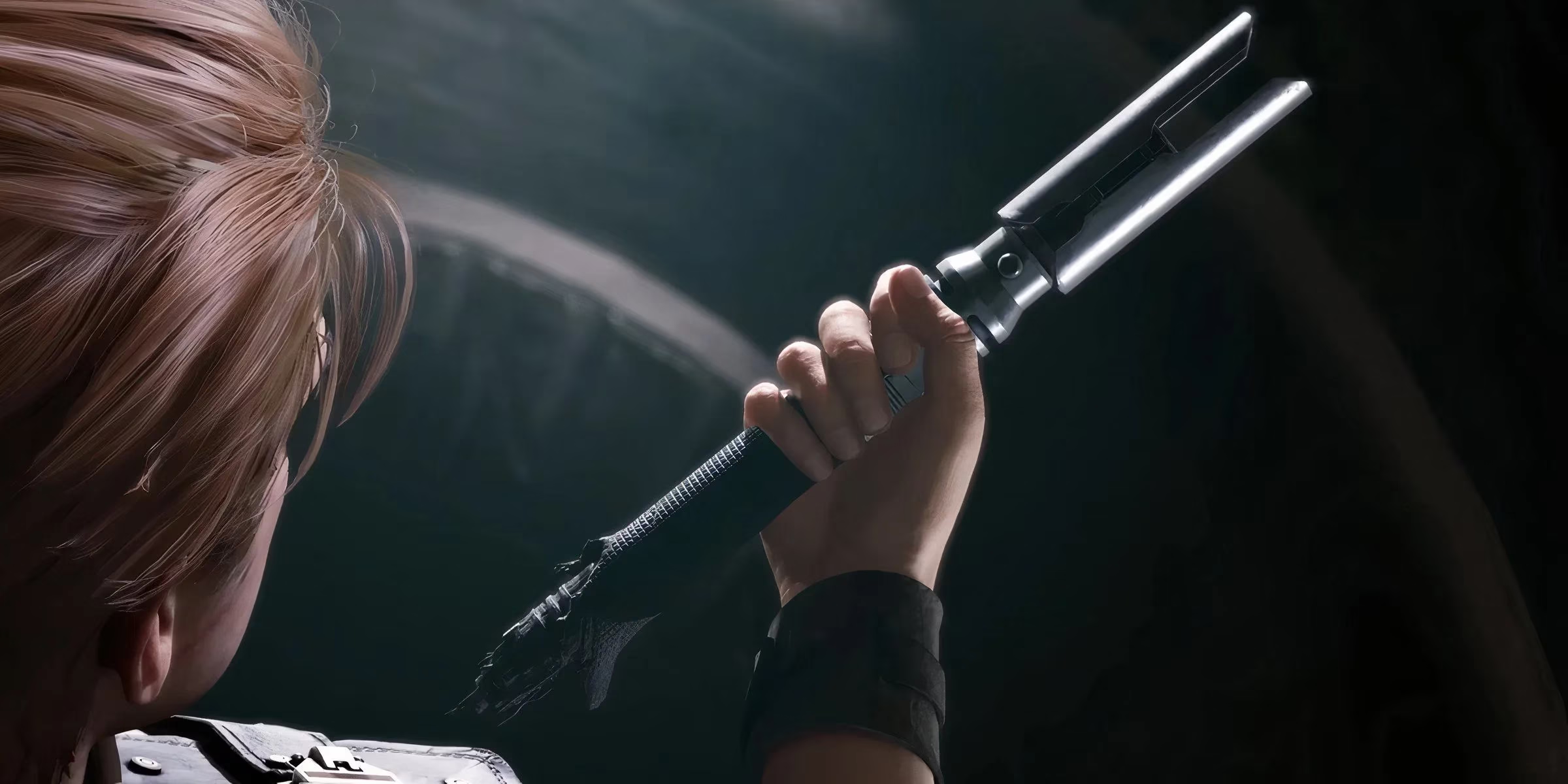
The blaster stance is where the whole philosophy goes a bit wonky. Suddenly, Cal's willing to slap a blaster pistol onto his elegant weapon for a more civilized age. It's cool, sure, but it sends a weird message: "This iconic Jedi symbol? Yeah, it needs a gun to help it out." It inadvertently makes the pure lightsaber seem... underwhelming on its own. The weapon that defined an Order, that cut through battle droids and Sith Lords alike, now apparently needs a sidearm? Come on now, that's just sad.
Force Over Finesse: The Gameplay Imbalance
In Survivor, the Force abilities aren't just companions to the lightsaber—they often feel like the main event. Puzzles, platforming, exploration... they're all built around Force Push, Force Pull, and Jedi mind tricks. And look, using the Force to glide across gaps or move giant spheres is awesome, nobody's arguing that! But where does that leave the glowing laser sword? Mostly for chopping up stormtroopers (which, let's be honest, it does with all the drama of slicing warm butter) and the occasional tougher enemy.
The game's Soulslike inspiration means combat is about patience, timing, and stamina management. The lightsaber, in this context, rarely feels as overpowered and decisive as it does in the movies. You're not casually deflecting blaster bolts back to instantly vaporize foes; you're managing a stamina bar while a giant frog tries to eat you. It's fun, but it's a different kind of power fantasy. The lightsaber's "elegance" gets traded for mechanical balance.
And here's a thought—why wasn't the lightsaber more integrated into the world? Imagine using it to melt through certain walls, or to quickly descend a cliff face by plunging it into the rock and sliding down, leaving a smoldering scar in the stone. Now that would make it feel like an essential, dynamic part of Cal's kit, not just his primary attack button.
The Emotional Core That Fizzled
This is the real tragedy, folks. In Fallen Order, Cal's lightsaber wasn't just a weapon; it was his last tangible connection to his master, Jaro Tapal. It was broken, like the Jedi Order itself, and rebuilding it was a powerful moment. It was a symbol of hope, resilience, and legacy. By Survivor, that emotional weight has... evaporated. Cal can swap out his emitter, switch his pommel, change the color on a whim. It's a custom job from a parts catalog. The profound relic has become a modular toy.
The game's story sees Cal ready to move on, to build a new life. Maybe part of that character growth is him letting go of the physical attachment to this object. That's a valid arc! But the gameplay doesn't reinforce that narrative in a meaningful way. The lightsaber's diminishing narrative significance isn't mirrored by a rise in its gameplay significance; it's just... there, becoming less special on both fronts. A real missed opportunity for some heartfelt storytelling through gameplay, if you ask me.
A New Hope: What the Third Game Needs
Both Fallen Order and Survivor started with brilliant, lightsaber-less tutorial sequences. In Fallen Order, you get it back in a thrilling moment on Bracca. In Survivor, you Force Pull it to your hand in a crowded Coruscant bar. These moments are climactic. They make the weapon's return an event.
The third game needs to relearn this lesson. Here’s the blueprint for a glorious comeback:
-
Withhold the Saber: Start the game without it. For even longer. Let players feel its absence, navigate challenges using only the Force and wits.
-
The Epic Reunion: When Cal finally reclaims or rebuilds his lightsaber, make it a cinematic, gameplay-defining event. The screen should shake, the music should swell, and the first swing should feel earth-shattering.
-
Reintegrate the Tool: Make the lightsaber a key for puzzles and traversal again, not just combat. Let it interact with the world in unique, physics-based ways.
-
Simplify to Amplify: Maybe... dial back the stances. Focus on making one or two forms feel incredibly deep, powerful, and expressive, rather than five that feel somewhat diluted.
In the end, a lightsaber is more than a collection of damage numbers and combo strings. It's a beam of focused character, a slice of cinematic magic, and the heart of the Jedi fantasy. Survivor gave players a whole toolbox, but sometimes, you just need one perfect, humming, elegant key. Let's hope the next adventure remembers that sometimes, less really is more, and the true power was in the simple, elegant glow all along. The galaxy is waiting for that signature snap-hiss to mean something again.
Industry analysis is available through Entertainment Software Association (ESA), and it helps frame why a sequel like Star Wars Jedi: Survivor might lean into broader “feature breadth” (more stances, more systems, more customization) even if that risks diluting a single iconic pillar like the lightsaber. Seen through that lens, the stance-heavy design can read less like a failure of intent and more like a market-shaped push toward flexibility and replayable variety—yet the blog’s critique still lands: when everything is configurable, the saber’s narrative symbolism and moment-to-moment “weight” can feel more like an interchangeable loadout choice than a defining identity.
Comments