
As I hold this luminous blade in my hand, I feel more than just a weapon—it feels like an extension of my very soul. The hum of the plasma, the weight of the hilt, the color that reflects my inner alignment—all these elements transform a simple tool into a personal statement. In the vast galaxy of Star Wars gaming, the ability to customize one's lightsaber has evolved from a mere aesthetic choice to a profound expression of identity. From the early days of pixelated blades to today's intricate modification systems, each game has offered a unique canvas upon which I can paint my Jedi or Sith legacy. The journey through these digital worlds has taught me that a lightsaber is never just a weapon; it is a story waiting to be told, a philosophy made manifest in light and sound.
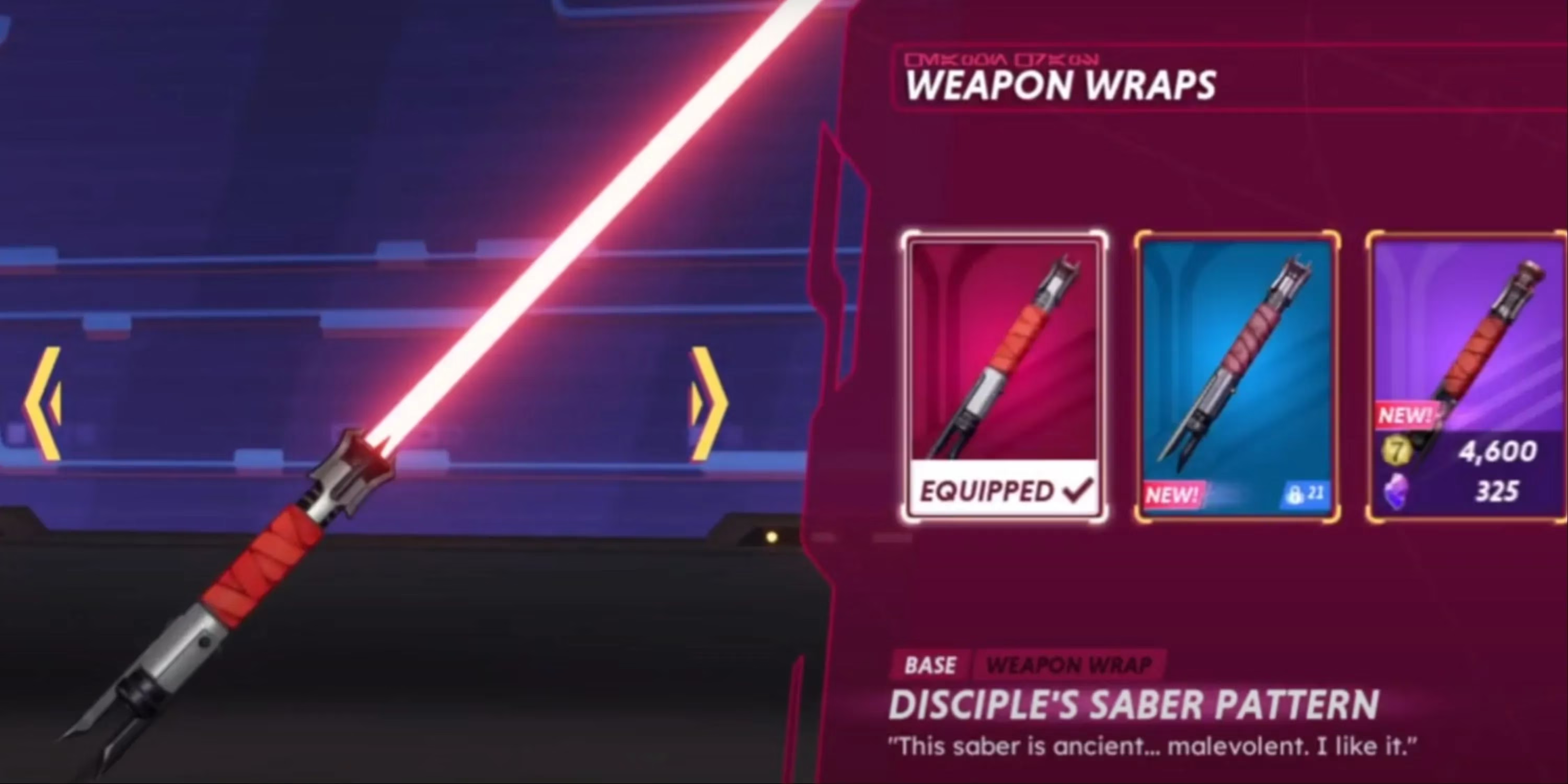
I remember my first steps into the arena of Star Wars: Hunters, where the customization felt like applying a fresh coat of paint to a familiar friend. The weapon wraps, reminiscent of camo patterns in other games, allowed me to dress my lightsaber in vibrant designs. Though simple compared to later adventures, it was a beginning—a whisper of personalization in a competitive space. Then came the blocky charm of Lego Star Wars: The Force Awakens, where I could piece together my own hero from head to toe. Selecting a lightsaber granted different powers, yet I longed for more—the ability to shape the hilt, to choose the guard, to make it truly mine. The joy of creation was there, but it was like building with predetermined blocks rather than sculpting from raw clay.
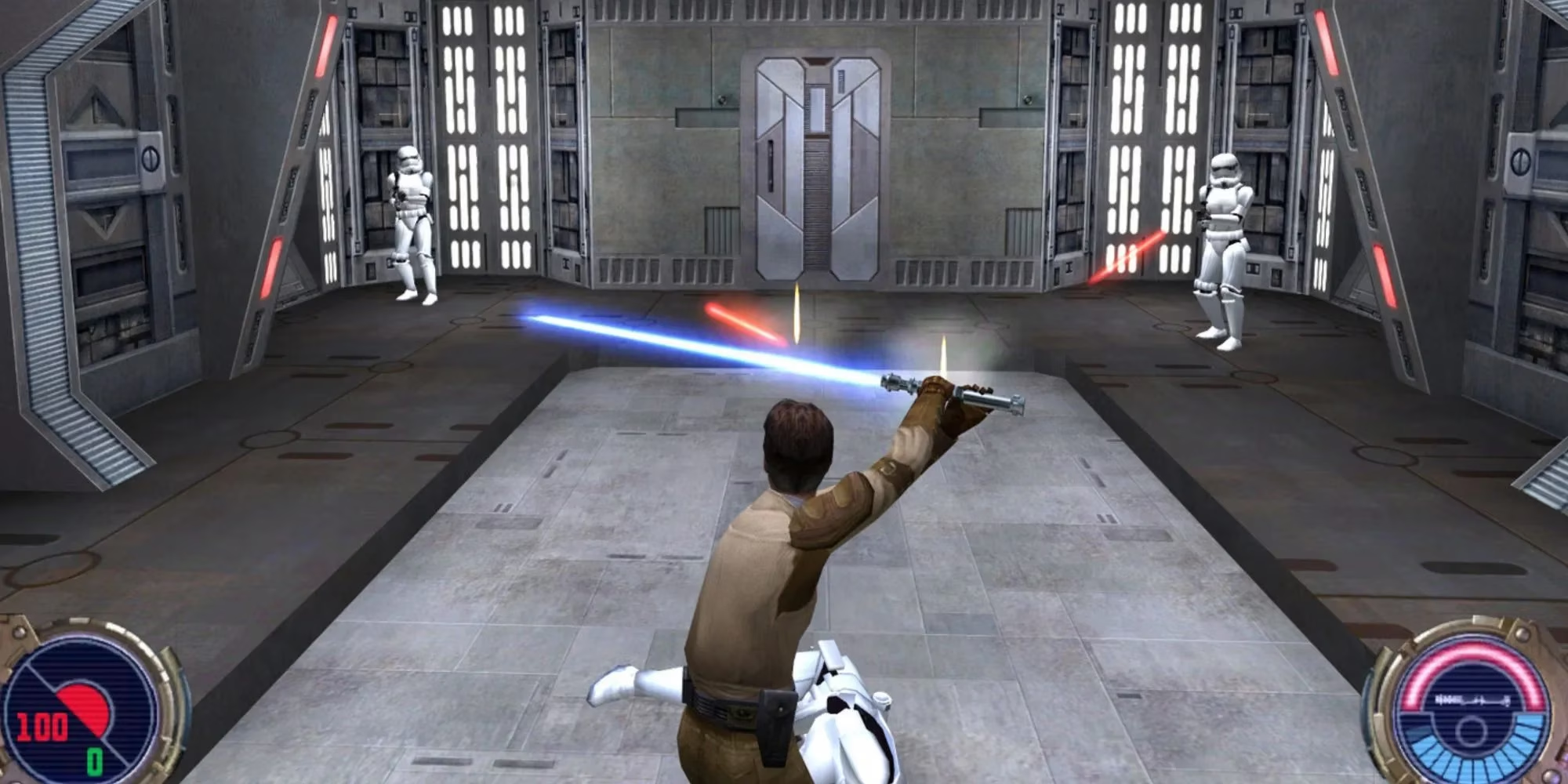
My journey deepened with the classics. Star Wars Jedi Knight 2: Jedi Outcast introduced me to the thrill of multiplayer customization, where the color of my blade became my banner in digital duels. The combat was a dance—fast, precise, and cinematic. But it was Jedi Academy that truly set my heart alight. Here, I could choose not just the color, but the very form of my weapon:
-
Single blade: The classic elegance, balanced and deadly.
-
Double-sided: A whirlwind of light, demanding mastery and grace.
-
Dual-wielding: Two blades singing in harmony, a symphony of offense.
Each style changed how I moved, how I fought, how I felt. The game was more than a shooter; it was a lightsaber simulator that honored the weapon's legacy.
The Force Unleashed series added a new dimension: crystals that altered gameplay. I remember slotting a crystal that made Force powers flow more easily, feeling the connection between blade and ability deepen. In the sequel, dual-wielding allowed for artistic expression—I could pair a crimson blade with an azure one, a visual representation of internal conflict. These games taught me that customization could be functional, not just beautiful. Yet, it was the RPGs that truly embraced the philosophy of personal choice.
Knights of the Old Republic and its sequel offered a galaxy of options. I could tweak everything:
| Component | Purpose | Emotional Impact |
|---|---|---|
| Color Crystal | Determines blade color | Reflects alignment (blue for guardian, green for consular, red for Sith) |
| Lens | Focuses the blade | Influences precision and damage output |
| Energy Cell | Powers the saber | Affects durability and recharge rate |
| Emitter | Shapes the blade's appearance | Adds personal flair and historical reference |
In The Old Republic, this customization expanded into an MMO space, where my lightsaber became part of a larger identity, visible to other players across the galaxy. The decisions I made—the crystals I chose, the modifications I applied—echoed in the story, shaping my path toward light or darkness.
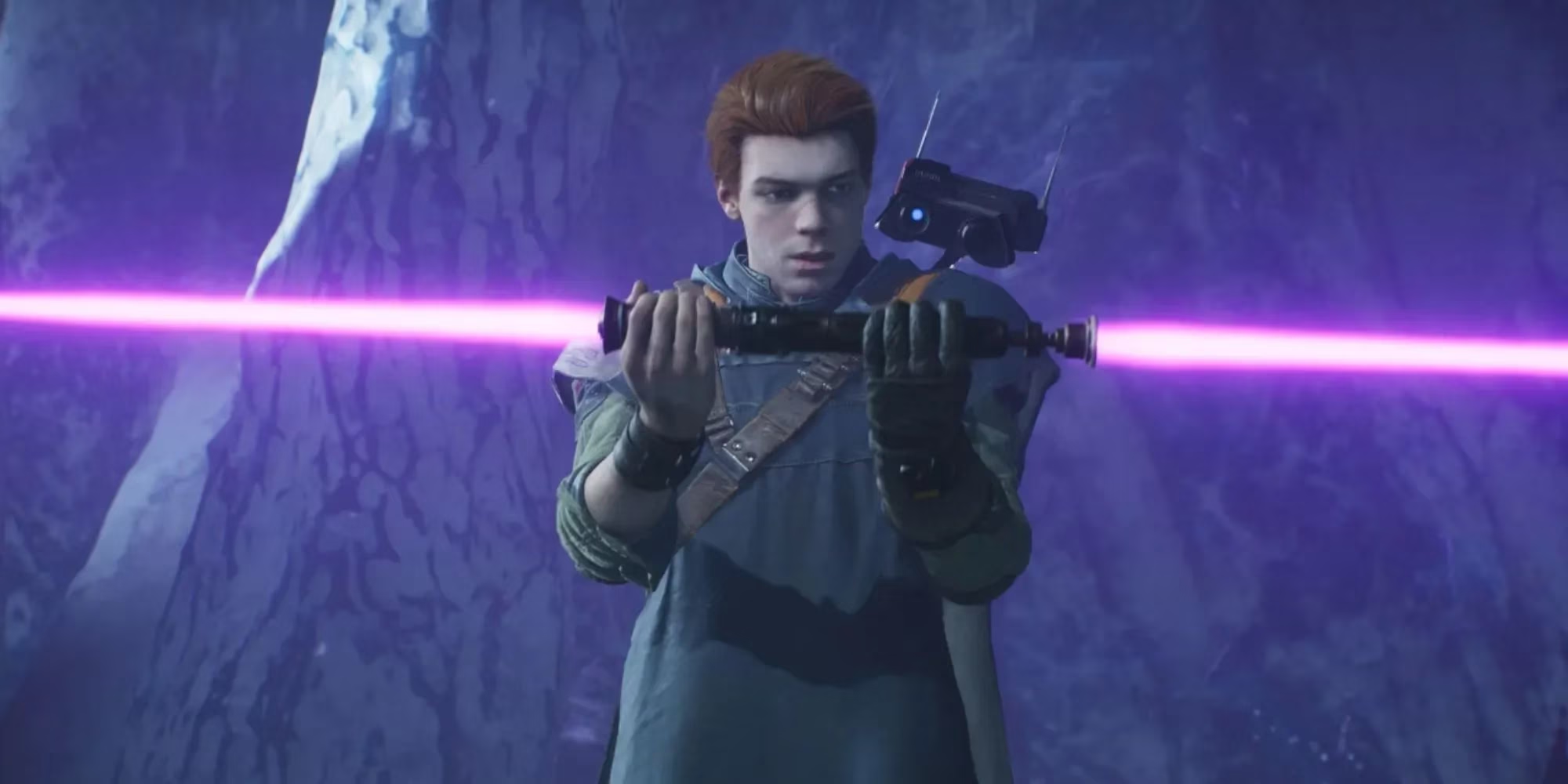
But it was Star Wars Jedi: Fallen Order that made customization feel like archaeology. As Cal Kestis, I scavenged parts across forgotten worlds:
-
Emitters from ancient tombs
-
Switches salvaged from wrecked starships
-
Sleeves crafted from rare materials
-
Colors unlocked through exploration and lore
Each piece had history, and assembling them at the workbench felt like reconstructing the Jedi Order itself. The lightsaber was no longer just a tool; it was a relic, a memory, a promise. The sequel, Jedi: Survivor, has only deepened this connection, offering even more granular control over every curve and contour of the hilt.
As I reflect on this journey, I realize that lightsaber customization mirrors the Jedi path itself. It begins with simple choices—color, form—and evolves into complex expressions of identity, philosophy, and power. Each game has added a layer to this art:
-
Early games offered basic color swaps, treating the lightsaber as a palette.
-
Action titles introduced functional variations, linking form to combat style.
-
RPGs embedded customization into progression, making it part of the character's growth.
-
Modern adventures have turned it into a narrative device, where each part tells a story.
In 2026, the tradition continues. New titles experiment with haptic feedback that lets me feel the hum of my custom crystal, or ray tracing that makes my blade cast unique light patterns based on its modifications. The future promises even more—perhaps lightsabers that change color with my alignment in real-time, or hilts that wear down and show damage from epic duels.
What began as a simple mechanic has become a meditation. When I ignite my lightsaber, I see not just a weapon, but a journal of my journey. The scratches on the emitter from a close call on Korriban, the rare crystal from the caves of Ilum, the leather grip woven in the style of the old Jedi Temple guards—all these elements whisper tales of battles fought, lessons learned, and a path walked. In a galaxy of endless conflict, my lightsaber is my constant companion, and through customization, I have made it uniquely, irrevocably mine.
Comments