
The galaxy far, far away trembles with anticipation as whispers of a third Star Wars Jedi game echo through hyperspace! While Respawn Entertainment and Electronic Arts maintain official silence, the cosmic dice of destiny have already been cast. The pattern is unmistakable, the tradition unbreakable: when Cal Kestis inevitably returns for another epic adventure, he will undoubtedly face adversaries whose tragic origins eclipse even the darkest corners of the Outer Rim. The franchise's villainous legacy demands nothing less than emotionally devastating antagonists whose fall from grace becomes the very foundation of cinematic conflict.
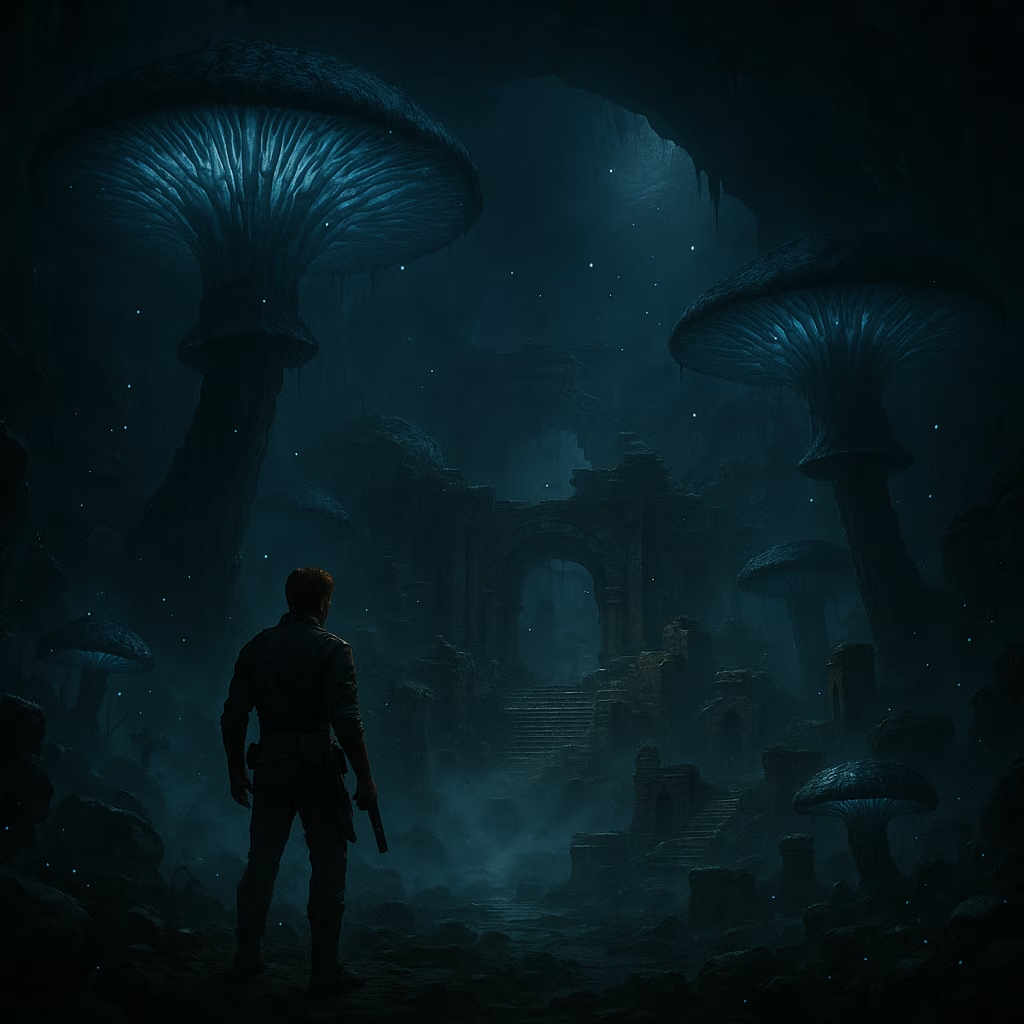
🎭 The Tragic Villain Blueprint: How Fallen Order Mastered Pathos
Respawn's genius lies not in creating pure evil, but in crafting villains who were once heroes! The blueprint was established with devastating precision in Star Wars Jedi: Fallen Order through the heartbreaking arc of the Second Sister, formerly known as Trilla Suduri. This once-promising Jedi Padawan endured unimaginable trauma during Order 66's brutal execution, only to be betrayed by the very master she trusted most. The psychological devastation of Cere Junda's unintentional betrayal under Imperial torture transformed Trilla from hopeful protector to vengeful hunter, creating one of the most compelling character arcs in modern gaming history.
The Transformation Process That Creates Iconic Antagonists:
-
Initial Idealistic Phase: Jedi training and noble intentions
-
Catalytic Trauma: Order 66 survival and personal betrayal
-
Psychological Breaking Point: Torture and abandonment
-
Dark Side Emergence: Anger replacing fear, new identity formation
-
Final Confrontation: Emotional climax with former allies
💥 Jedi: Survivor's Masterclass in Emotional Devastation
If Fallen Order set the template, Jedi: Survivor perfected it with Bode Akuna's shocking betrayal! This former Republic Intelligence operative turned desperate father represents the ultimate evolution of the tragic villain archetype. Bode's entire motivation revolves around protecting his daughter in a galaxy gone mad, making his eventual turn to the dark side both predictable and utterly heartbreaking. The brilliant narrative twist reveals that sometimes, the most dangerous villains aren't those seeking power, but those fighting for love in all the wrong ways.
| Villain Aspect | Trilla Suduri | Bode Akuna |
|---|---|---|
| Primary Motivation | Revenge for betrayal | Protection of family |
| Jedi Background | Former Padawan | Former Knight |
| Order 66 Experience | Direct survivor | Covert survivor |
| Turning Point | Master's betrayal | Wife's death |
| Final Redemption | Possible before death | Tragic self-destruction |
🔮 Predicting Jedi 3's Inevitable Tragic Antagonist
The cosmic patterns are undeniable! A third installment will absolutely continue this magnificent tradition of emotionally complex villains. Based on established precedents, the next adversary will likely be:
🔥 Another Order 66 Survivor - The perfect tragic foundation
🔥 Force-Sensitive with Unresolved Trauma - Decades of emotional baggage
🔥 Personal Connection to Cal's Journey - Perhaps a former ally or mentor
🔥 Morally Ambiguous Motivations - Neither purely evil nor entirely good
🔥 Heartbreaking Redemption Arc - Ultimate sacrifice or tragic ending
The potential for narrative greatness is astronomical! Imagine a villain who survived Order 66 by sacrificing their own master, or one who turned to the dark side to protect other survivors. The possibilities for psychological depth are limitless when dealing with characters who've endured decades of Imperial oppression.
🌌 The Psychological Depths Unexplored
What makes this villain formula so brilliantly effective is its exploration of universal themes: betrayal, survival guilt, and the desperate measures people take when pushed beyond their breaking point. Future antagonists could explore even darker psychological territory:
-
The Jedi Who Embraced the Empire: What if some survivors genuinely believed the Empire brought order?
-
The Master Who Abandoned Their Padawan: Survivor's guilt manifesting as ruthless efficiency
-
The Force User Who Blames the Jedi: Believing the Order's arrogance caused their own destruction
✨ Why This Formula Creates Gaming Legend
The tragic villain trend represents storytelling perfection in interactive media! By creating antagonists with understandable motivations, Respawn ensures that every confrontation carries emotional weight far beyond typical boss battles. Players don't just fight enemies; they confront broken dreams, shattered ideals, and the devastating consequences of survival in a tyrannical galaxy. This approach transforms standard action sequences into profound philosophical debates about morality, sacrifice, and the true meaning of heroism.
The Emotional Impact Spectrum:
-
Initial Antagonism - The villain appears as a straightforward threat
-
Revelation Phase - Tragic backstory emerges, creating empathy
-
Moral Conflict - Players question who's truly right or wrong
-
Climactic Confrontation - Emotional weight magnifies every lightsaber clash
-
Aftermath Reflection - Lingering questions about choices and consequences
The future shines brighter than a supernova for the Star Wars Jedi franchise! As technology advances and storytelling techniques evolve, the potential for even more sophisticated tragic villains grows exponentially. The next antagonist might not just have a tragic past but could be someone Cal personally failed to save, or perhaps a mirror version of what Cal himself could become under different circumstances. The cosmic stage is set for another masterpiece of interactive tragedy that will undoubtedly leave players emotionally devastated in the most magnificent way possible!
Comments