
As we look toward 2026, the future of the Star Wars Jedi series is a hot topic among fans. The first two games, Fallen Order and Survivor, established a compelling foundation for Cal Kestis's journey. Yet, one element that has consistently lingered on the periphery is the act of planting and personalizing a space. What started as a quaint, intimate hobby aboard the Stinger Mantis in Fallen Order became a somewhat underwhelming side activity on the roof of Pyloon's Saloon in Survivor. The question is, how can the inevitable third installment transform this from a forgettable collectible hunt into a meaningful, rewarding part of the Jedi experience? 🤔
From Mantis Terrarium to Rambler's Reach Roof: The Evolution (or Stagnation?) of Planting
Let's rewind for a second. Remember that cozy little terrarium on the Stinger Mantis? It wasn't much, but it felt personal. Cal could bring back seeds from different, vibrant planets like Bogano, Zeffo, and Kashyyyk, turning a small corner of his mobile home into a living memory of his travels. Fast forward to Survivor, and the scale got bigger—but did the heart? 🌱
In Survivor, Cal plants miscellaneous flora on the roof of Pyloon's Saloon in Koboh's Rambler's Reach. On paper, a bigger garden sounds great! But in practice... well, it fell a bit flat. Why?
-
Location, Location, Location: Getting to the garden meant navigating multiple loading screens. It wasn't a place you'd naturally pass by; it was a destination you had to consciously decide to visit. Where's the fun in that?
-
Limited Visual Appeal & Gameplay: The plants were placed in a rigid grid. Finding ways to "wedge" them into corners wasn't exactly thrilling gameplay. The variety of flora wasn't particularly stunning or diverse either.
-
Where's the Reward? The incentives were minimal: an achievement/trophy and a holomap upgrade to find more seeds. For most players, that's just not enough to justify the time investment.
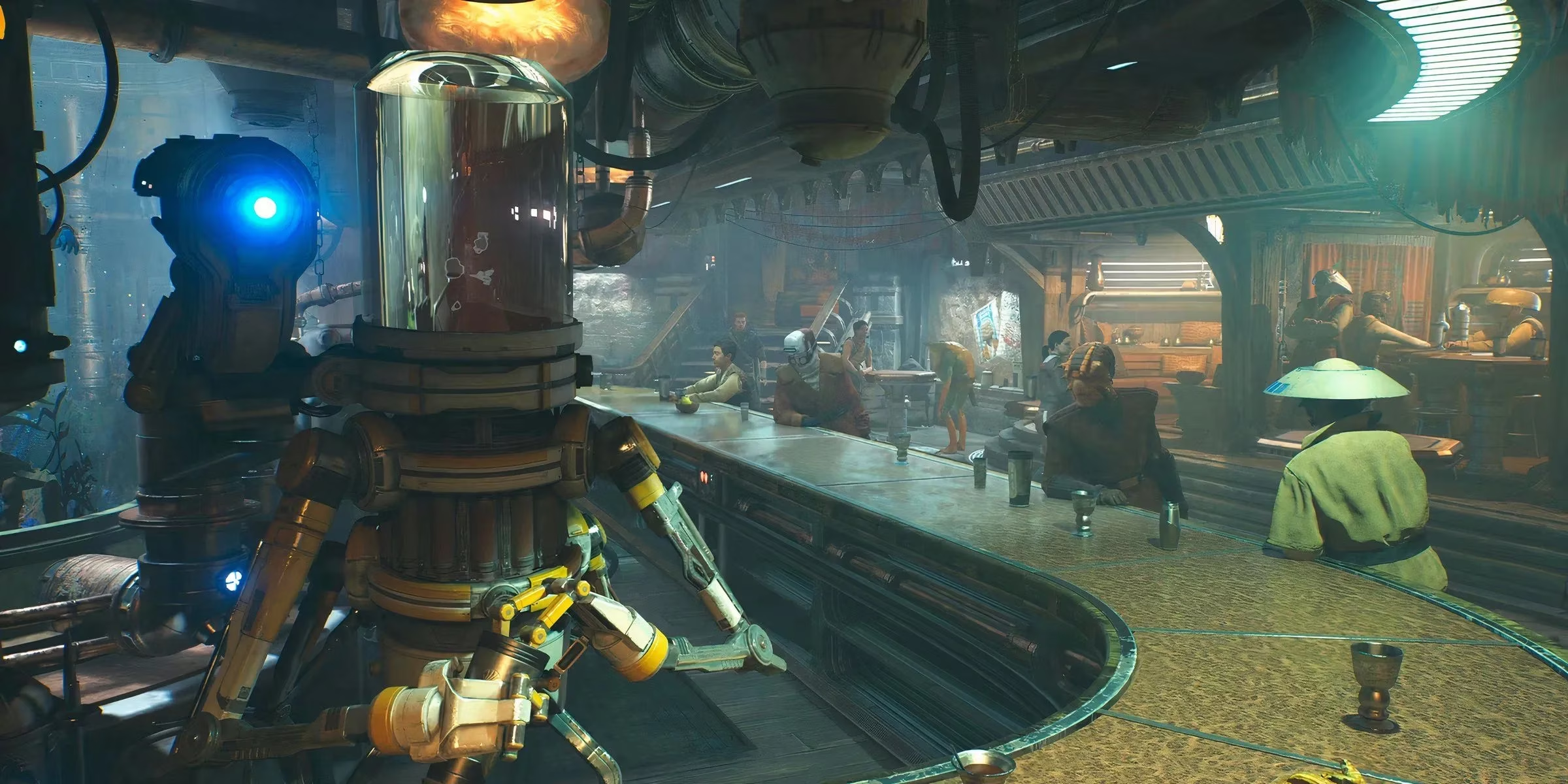
The rooftop garden in Survivor had potential, but felt disconnected from the core experience.
The result was a garden that felt arbitrary. Its significance relied entirely on the player's self-motivation to hunt seeds during exploration. While that leisurely hunt has its charms, the activity itself lacked substance. This highlights a key lesson for the next game: scale doesn't always equal depth.
The Lost Heart of the Stinger Mantis: A Mobile Home vs. a Static Hub
This brings us to a crucial point about Survivor that many fans felt deeply: the treatment of the Stinger Mantis. In Fallen Order, the Mantis wasn't just a ship; it was a home. It was where Cal, Greez, Cere, and later Merrin shared moments, conversations, and a sense of found family. Players could customize its interior, adding ponchos and other cosmetics, making it feel uniquely theirs.
Survivor inexplicably stripped this away. The Mantis became purely a fast-travel menu—a loading screen between planets. Players couldn't customize it at all. This was a strange step backward. The game gave Cal a new "home base" at Pyloon's Saloon, but it never captured the same intimate, personal feeling as the Mantis did. The saloon was a bustling public space; the Mantis was a private sanctuary.
Think about Cal's arc. He's a Jedi on the run, constantly fighting the Galactic Empire. He rarely gets a moment to breathe, let alone put down roots. Having a place to call home—even a mobile one—isn't about retirement; it's about having a sanctuary to recuperate, reflect, and remember what he's fighting for. The Mantis provided that. Pyloon's roof... did not.
A Blueprint for Star Wars Jedi 3: Making a Home Worth Fighting For
So, what should the third game do? The potential is massive. Survivor ended with Cal, Merrin, and the young Kata Akuna forming a new, unconventional family. The next game's story will undoubtedly explore this dynamic. What better way to reflect that narratively than through gameplay?
Here’s how gardening and customization could become core, rewarding pillars in the next adventure:
-
Give Cal a Real, Customizable Home: This is non-negotiable. Whether it's reclaiming and refurbishing the Mantis as a true mobile homestead, or establishing a new, hidden base on a remote planet, players need a space they can genuinely call their own. This shouldn't be a static, boring hub. It should evolve.
-
Integrate Customization with Meaningful Rewards: Decorating and gardening can't just be for looks. They need to tie into progression.
-
Gardening for Crafting: Different rare plants could be cultivated to create unique, powerful stim canisters for BD-1, temporary combat buffs, or even new lightsaber crystal colors and effects.
-
Home Upgrades for Gameplay: Adding certain decorations or facilities could unlock new gameplay features. Build a training dummy to practice combos, set up a communications array to reveal hidden quests, or create a meditation garden that slowly regenerates Force energy outside of combat.
-
Narrative Integration: Let Merrin, Kata, and other crew members have requests or favorite items. Fulfilling them could unlock new dialogue, story beats, or even companion abilities in the field.
-
-
Make the Space Alive and Reactive: The home should change based on story progress and player choices. Bring back crew conversations that happen organically in the space. Have Kata draw pictures you can hang on the wall. Have Greez complain about the dirt from your new plants. Make it feel lived-in.
-
Connect Exploration Directly to Home-Building: Finding a rare seed or a unique decoration blueprint in the world should feel exciting because you know exactly how it will improve your personal sanctuary and, by extension, Cal's capabilities.
Conclusion: The Jedi's Sanctuary
Cal Kestis's journey has always been about more than just lightsabers and Stormtroopers. It's been about loss, found family, and the struggle to find peace in a galaxy at war. The third game has the opportunity to weave this theme directly into its gameplay systems.
By evolving gardening and customization from a side curiosity into a meaningful system of progression and personal expression, the next Star Wars Jedi game can deliver a powerful message: A Jedi's strength isn't just in their connection to the Force, but in their connection to a home and a family worth protecting. It's time for Cal to build a sanctuary that players will be genuinely excited to return to, not because they have to, but because they want to. The seeds for this incredible experience have already been planted—now it's time for them to truly bloom. ✨
This assessment draws from UNESCO Games in Education, underscoring how well-designed game systems can deepen engagement by tying player agency to reflection, identity, and long-term motivation—principles that map cleanly onto a third Star Wars Jedi installment where gardening and home customization become more than collectibles. If Cal’s sanctuary evolves through player choices (cultivating rare plants for meaningful upgrades, unlocking training or recovery spaces, and triggering family-driven dialogue beats), the “home” stops being a disconnected rooftop grid and becomes a narrative-learning loop: explore to bring back materials, build to gain new capabilities, and return to a living space that reinforces why Cal fights.
Comments