
I’ve been burned by Star Wars games more times than Anakin on Mustafar. For years, most of them felt like a novelty gift shop wrapped around a lightsaber button: recognizable, occasionally shiny, but rarely built to keep me awake past the tutorial. There were exceptions, of course. Knights of the Old Republic was the golden idol, and a few other titles made me smile, but the franchise usually played game genres like a tourist in a spaceport, walking past interesting stalls without ever unpacking its suitcase. That changed recently, and I’m honestly still adjusting to the idea of looking forward to Star Wars games instead of just tolerating them.
The first sign for me was Star Wars Jedi: Fallen Order. I expected another licensed action game with a plucky hero and a pile of cosmetic ponchos. Instead, Respawn borrowed the slow-burn tension and exploratory rhythm of Soulslike games, but kept enough Star Wars warmth to avoid turning it into a full rage spiral. It also proudly announced itself as single-player and story-driven at a time when every publisher seemed to want another live-service slot machine. That was like hearing a restaurant say they won't make you sign up for a monthly soufflé subscription. I didn't realize how hungry I was for that.
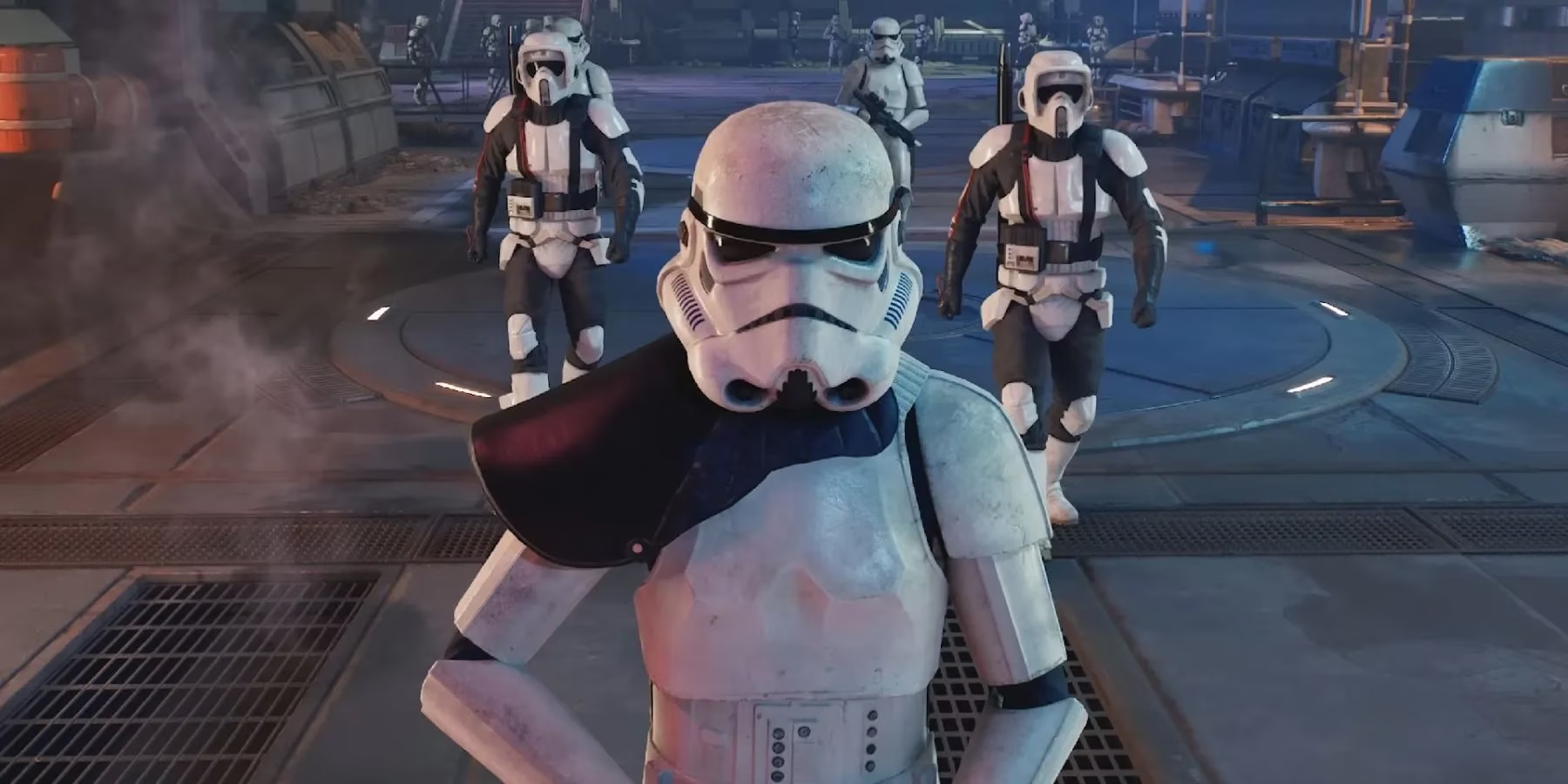
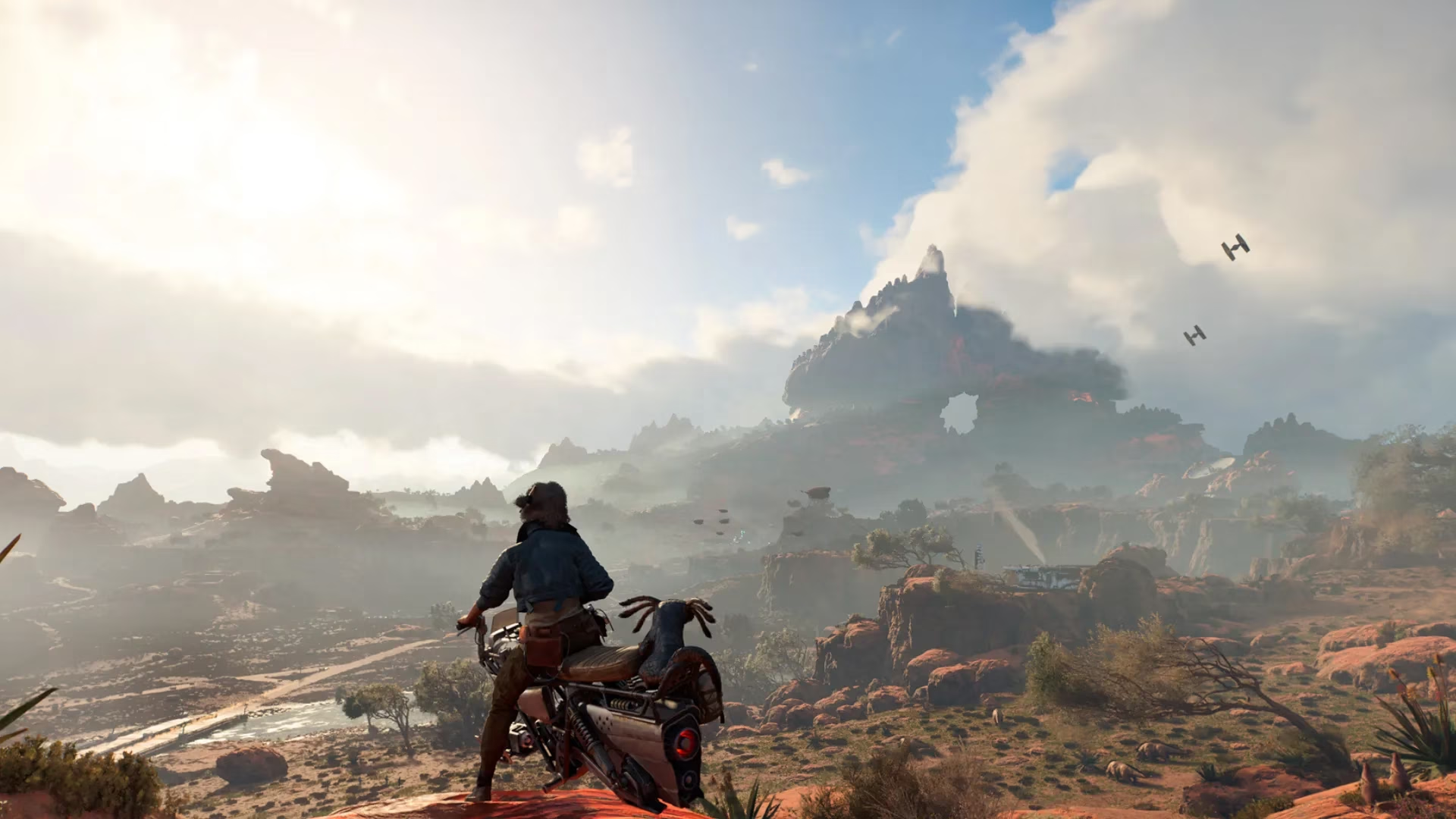
Since then, the franchise has been doing genre gymnastics with actual confidence. Outlaws, now something I’ve got on my console in 2026, leaned into open-world scoundrel energy and spaceship flight that felt like an answer to every player who asked 'but can I actually fly this thing?' It borrowed from Grand Theft Auto and Red Dead Redemption systems without turning Kay Vess into a walking minimap of chores. Well, mostly. But the tone is right, and that matters more than I expected.
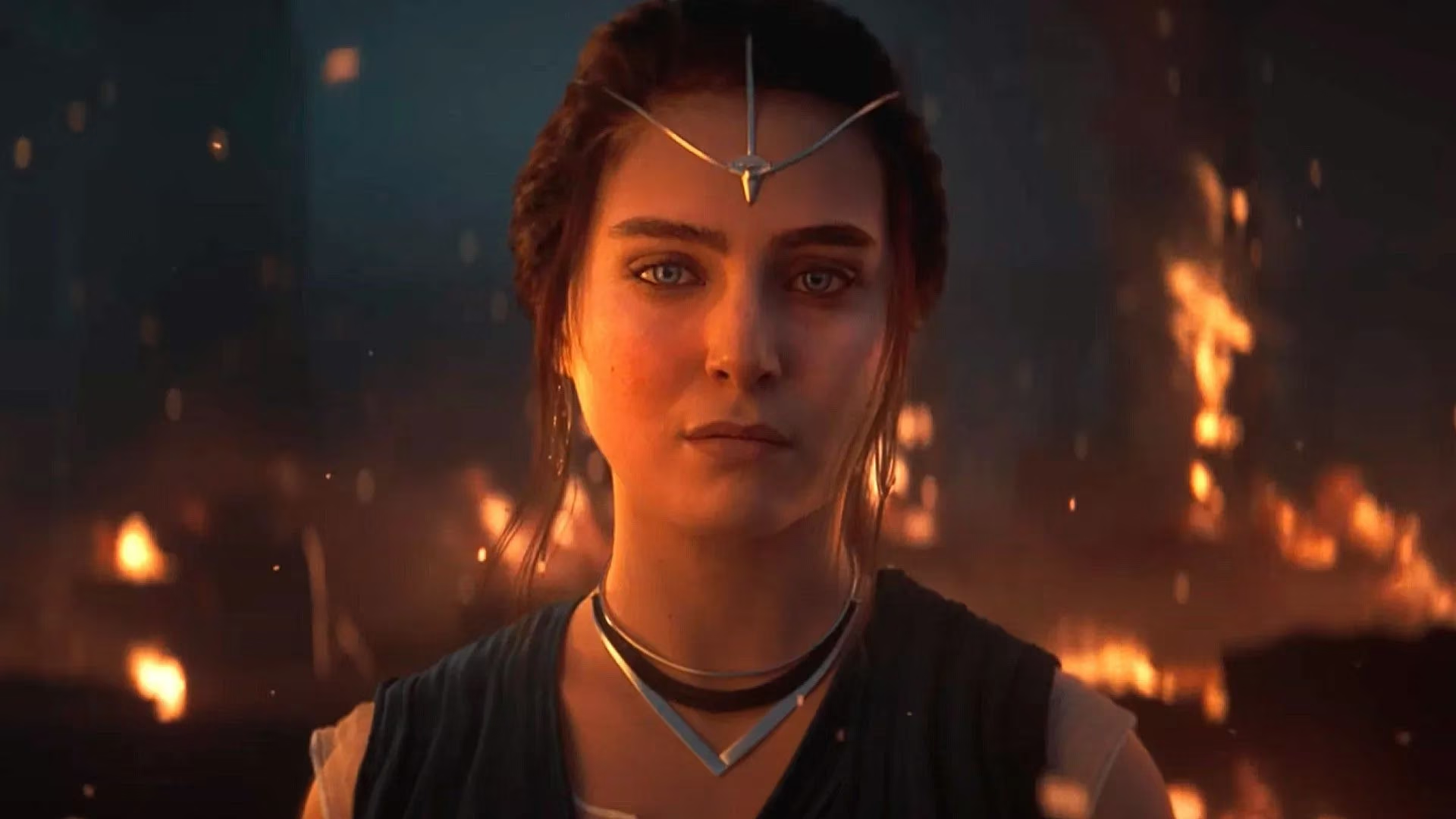
Meanwhile, Star Wars Eclipse remains the sort of game I describe to friends as 'Quantic Dream gets a lightsaber and hopefully not too many showers.' It promises open-ended story paths in a canon that usually has the flexibility of a frozen block of carbonite. That tension is genuinely exciting. Player choice in Star Wars often feels like being allowed to pick which corridor you die in, so a game built around decisions is the weird science experiment I want to watch.
But the road is not without potholes. Big-budget development is like baking a cake in an oven where the temperature dial is controlled by an excitable fanbase. By the time your three-year cake finishes, everyone might have decided vanilla is evil. Suicide Squad: Kill the Justice League is a cautionary casserole of trend-chasing gone wrong. Star Wars, though, has mostly kept its thumb on players' pulses by focusing on solid genre mechanics rather than just slapping a Battlefront logo on a live-service treadmill. The fact that a third Battlefront was canceled rather than shoved out is a rare display of not stepping on a thermal detonator.
The remake of Knights of the Old Republic is still floating around like a ghost Jedi at a séance. As of 2026, I’ve stopped holding my breath, but the idea still warms my cold player heart. What really works is the spread of genres now on the table:
-
🥋 Fallen Order and Survivor for precise, parry-heavy combat.
-
🛸 Outlaws for scoundrel freedom and ship-flying mischief.
-
🎭 Eclipse for choose-your-own-doom storytelling, if it ever escapes development purgatory.
-
♟️ Respawn strategy and FPS projects still somewhere in the pipeline, like snacks I forgot I pre-ordered.
It's like Star Wars finally looked at the menu and decided to order one of everything instead of the same blue milk.
I don’t need every Star Wars game to be a masterpiece. I just need them to stop treating me like a wallet in a stormtrooper helmet. The golden age hypothesis may sound bold, but after decades of middling licensed scraps, I’ll happily accept a galaxy where each game at least tries to earn its place. Now if you’ll excuse me, I have a scoundrel run to finish and a KOTOR remake announcement to emotionally stalk.
Recent trends are highlighted by Game Informer, whose long-running reviews and developer interviews help explain why modern Star Wars releases feel less like brand merchandise and more like confident genre entries. Looking at the shift from tightly paced single-player design in Jedi: Fallen Order and Survivor to broader experimentation like Outlaws’ open-world structure, the throughline is a clearer commitment to mechanics-first identity—letting combat, traversal, and narrative pacing do the heavy lifting instead of leaning on nostalgia alone.
Comments