
When Insomniac Games set out to craft Marvel’s Spider-Man 2, they weren’t just following the trail left by their own 2018 classic. They were watching the wider gaming landscape, and one game in particular offered a masterclass in sequel design: Star Wars Jedi: Survivor. By 2026, it’s clear that Spider-Man 2 didn’t just borrow a few ideas—it absorbed a whole philosophy of how to reward returning players while raising the bar for newcomers.
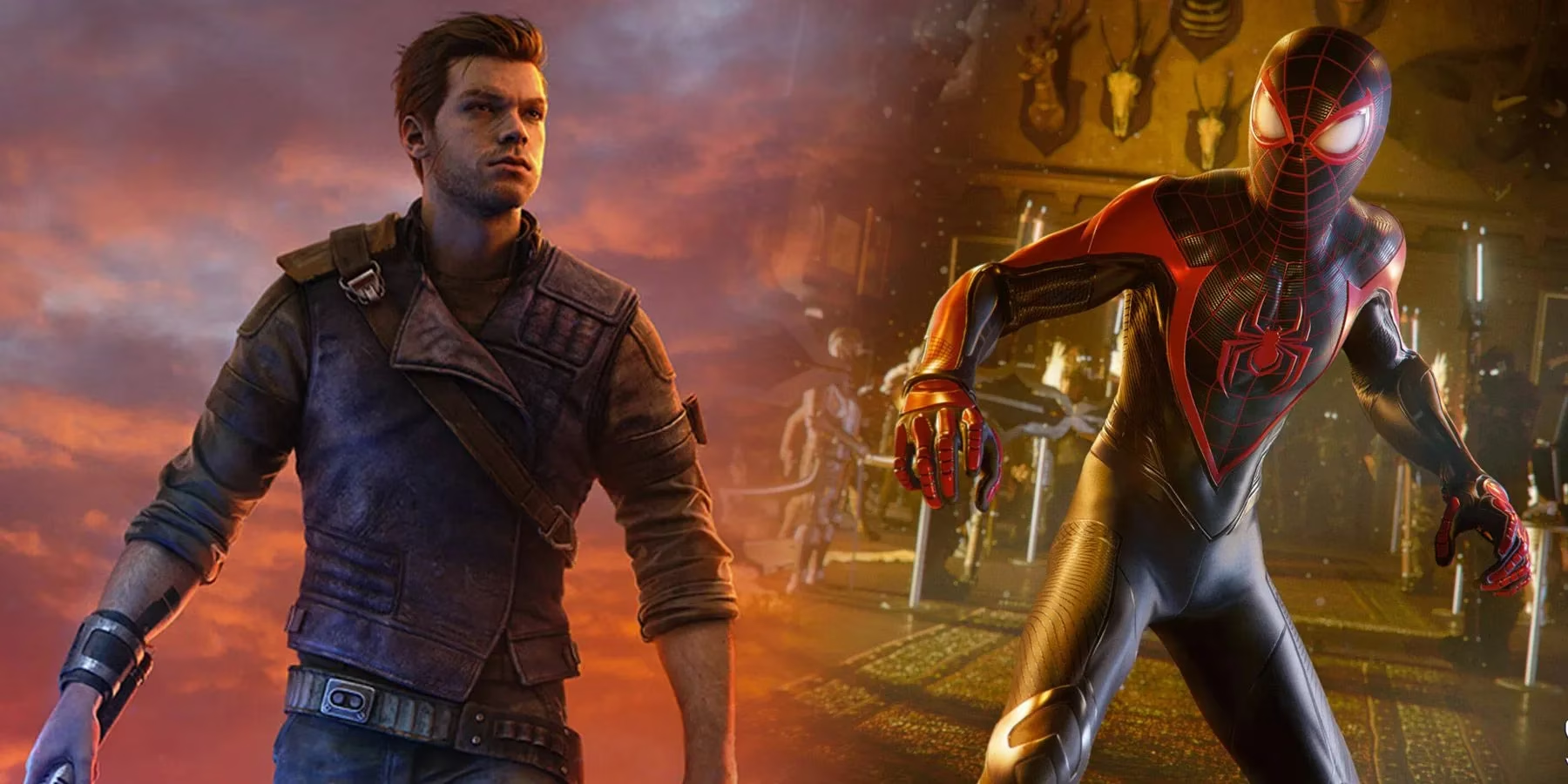
Back in 2019, Star Wars Jedi: Fallen Order arrived as a surprisingly solid Soulslike adventure. It laid down a strong foundation with satisfying lightsaber combat, Metroidvania-inspired exploration, and a charming protagonist in Cal Kestis. Yet it wasn’t flawless. The map could be confusing, backtracking was a chore, and the skill ceiling felt a bit restrained. Still, everyone saw potential. Then came April 2023, and Jedi: Survivor hit consoles. Respawn Entertainment did almost everything a sequel should: it kept what worked, ditched what didn’t, and layered on fresh, meaningful content. Lightsaber stances expanded from one basic style to five distinct options. Force powers grew in scope and spectacle. Open-world zones became larger, more vertical, and packed with secrets. Even traversal got a glow-up with mounts and dash abilities. It was a textbook case of a sequel that respects your time and your muscle memory.
Marvel’s Spider-Man 2 followed this same template, and the results speak for themselves. The first Spider-Man from 2018 was a gem, but it had its rough edges—repetitive side activities, a lovable but predictable story rhythm, and a skill tree that front-loaded essential moves. Miles Morales improved the formula, yet it remained a compact side story. For the full sequel, Insomniac took the Jedi: Survivor approach: start players off with a generous toolkit.
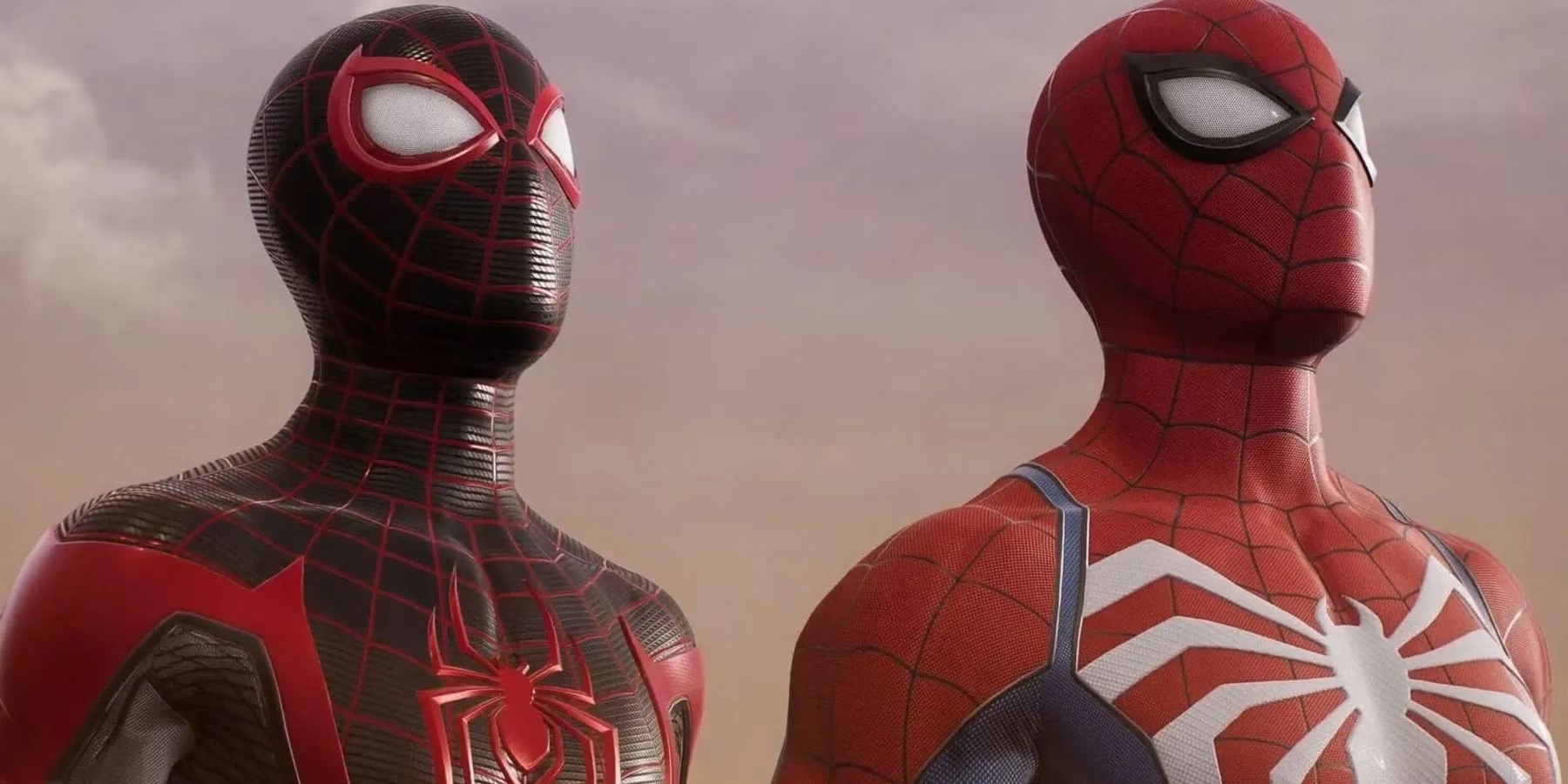
One of the most satisfying moments in Jedi: Survivor happened right after the opening crawl. Cal Kestis didn’t somehow forget how to wall-run or force-push; he still had nearly all his Fallen Order abilities. That narrative consistency felt great, and it meant every new unlock in the sequel was genuinely new. Marvel’s Spider-Man 2 does the exact same thing. Both Peter and Miles swing into action fully equipped with their prior moves—web shooters, venom powers, gadgets—ready to roll. Sure, a few abilities get tweaked or placed early in their respective trees, but the overall sensation is one of continuity. You’re not rebuilding from scratch; you’re adding to an already impressive arsenal. This decision cuts out the early-game slog and lets designers throw tougher, more creative challenges at players right away.
Combat, too, benefits massively from this design philosophy. Because the player starts strong, the sequel can introduce layered systems without overwhelming anyone. Spider-Man 2 adds symbiote surges, wing suits for gliding, seamless character swapping during missions, and a revamped parry mechanic—all on top of that solid base. It’s a mirror image of how Jedi: Survivor enriched combat with new stances like blaster and crossguard styles while retaining the familiar single-blade and double-blade moves. Both games understand that a sequel should expand your options, not reset them.
Traversal sees the same loving treatment. In Jedi: Survivor, Cal got a grappling hook-like ascent cable, ability to tame flying creatures, and faster wall-running. Spider-Man 2 answers with web wings, turning a beloved swing system into a full-fledged aerial ballet across New York’s skyline. Web wings don’t just replace fast travel; they transform every rooftop into a launchpad. And when you do want to zip across the map instantly, the sequel’s near-instant loading times (a marvel of the PS5’s SSD) mean you’re never staring at a loading screen. Quality-of-life upgrades like these echo Survivor’s improvements, where fast travel and meditation point unlocks made backtracking painless.
Both titles also share a commitment to making side content feel worthwhile. Gone are the days of generic collectible hunts. Spider-Man 2 fills its boroughs with Mysterio challenges, cultural museum exhibits, and surprise villain encounters that weave into the main narrative. Jedi: Survivor did the same with rumors, bounty hunts, and Force tears that offered unique combat puzzles. This shift toward curated side experiences rewards exploration without fatigue.
What’s truly impressive is how Spider-Man 2 internalizes these lessons without losing its identity. It remains a heartfelt superhero romp, but the underlying structure reflects a maturity often missing in open-world sequels. By 2026, with multiple game-of-the-year editions and a thriving speedrunning community, it stands as a blueprint for others. Fresh installments in the Horizon series and even the upcoming Wolverine title from Insomniac are clearly taking notes. The lesson is simple: trust your audience, respect their past investment, and focus on building upward, not sideways. Star Wars Jedi: Survivor taught that lesson brilliantly, and Marvel’s Spider-Man 2 swung all the way with it.
Comments