
I remember the moment my trust shattered. It was 2026, and I was replaying Star Wars Jedi: Survivor, a game that, years after its release, still held profound secrets. As Cal Kestis, I had fought alongside Bode Akuna, a man I considered a brother in our struggle against the Empire. The revelation of his betrayal—that he was a former Jedi secretly working for the Imperial Security Bureau—was a gut punch. But as I delved deeper into the echoes of the Force he left behind, I uncovered a history far darker and more complex than simple treason. Bode's past hinted at a clandestine chapter of the Clone Wars, one that might have pulled a secret Jedi conspiracy straight from the pages of Legends into our new canon.
Bode hid his true nature well, but my connection to the Force—Cal's connection—let me perceive fragments of his truth. One persistent echo revealed he didn't just serve the Republic; he worked for its Intelligence branch during the Clone Wars. This explained his seamless transition to spying for the Empire under his former commander, Lank Denvik. But the echoes whispered of something more. They suggested Bode wasn't merely an intelligence officer; he was an assassin. The Republic had specialized troops for such wetwork—ARC troopers came to mind—so why use a Jedi? Unless the target required a specific kind of power. The likely candidates? Count Dooku, or the shadowy Darth Sidious himself. Hunting a Sith Lord would demand an operative of equal mystical potency. This realization sent a chill down my spine. If Bode was a Jedi ordered to kill Sith, his profile aligned perfectly with a group I'd only read about in archived Legends holocrons: the Jedi Shadows.
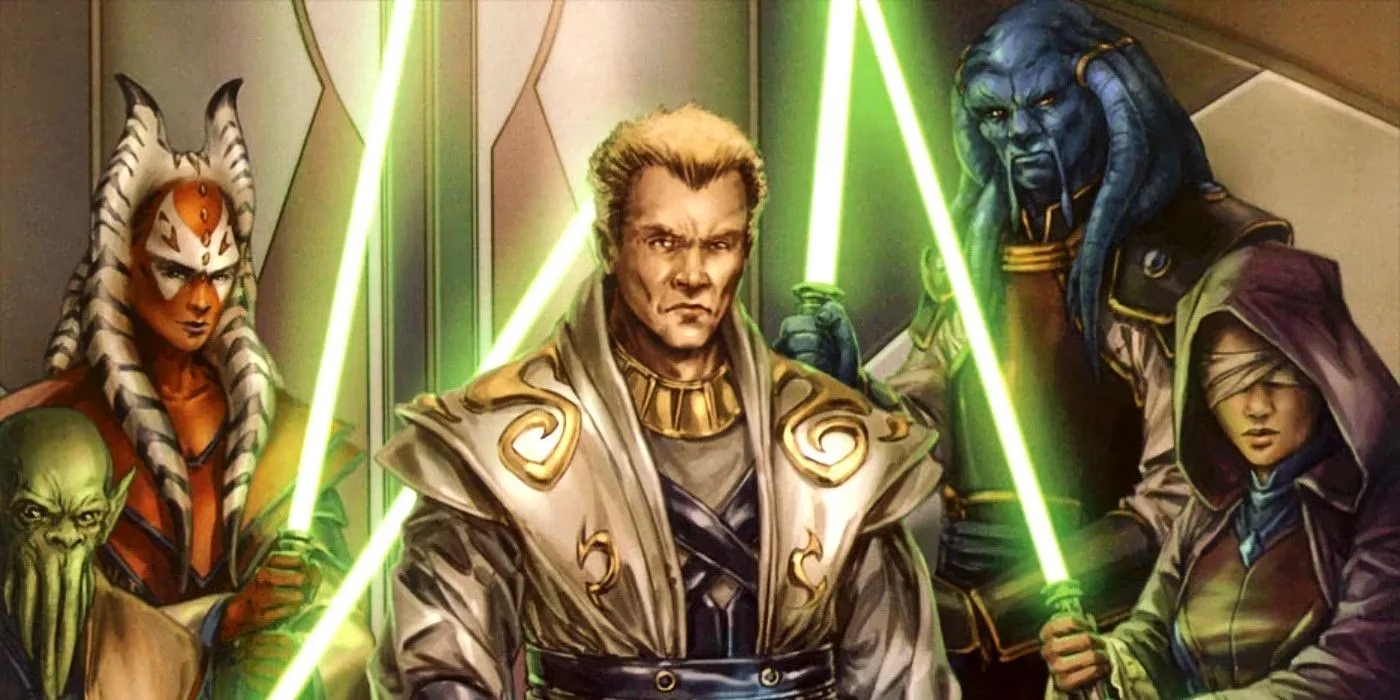
The Shadows of Legends were a fascinating, grim reflection of the Jedi Order. Operating thousands of years before my own time, they were trained in infiltration, sabotage, and assassination—tools to surgically excise the Sith threat. Their mandate was to find and destroy Sith artifacts and, when necessary, eliminate Sith Lords. Sound familiar? Bode's skillset was a perfect match. Yet, the Shadows' history was a cautionary tale. In their zeal to destroy the dark side, they often danced perilously close to it, adopting its methods and sometimes falling to its temptations. This mirrored what I sensed in Bode. Throughout our journey, he used a powerful Force technique: concealment. He masked his presence, his strength, and his history from me, from Cere, and from Master Cordova. This ability, the same used by Emperor Palpatine to hide his true nature, is deeply associated with the dark side. Bode wasn't an Inquisitor; he wasn't Sith-trained. So where did he learn it? The unsettling answer seemed to be during his service. Just like the Shadows of old, Bode may have been taught—or may have drifted toward—darker techniques to better fight his enemy, a path that ultimately corrupted him.
This connection grows even more compelling when you consider the secretive masters who might have guided such operatives. In Legends, the Jedi Shadows were often tools of a hidden cabal within the Order known as the Covenant. This group represented the ultimate corruption of the Shadow philosophy, using fear and pre-emptive violence to try to stamp out the Sith. Their most horrific act was the massacre of Padawans based on a prophecy that one would fall. The Covenant believed the ends justified the darkest of means. Could such a group have been reborn during the Clone Wars? It's tragically plausible. The Jedi Council of that era was stretched thin, focused on leading a galactic war. Some Jedi, desperate and seeing the Sith's hand everywhere, might have believed more aggressive, covert action was needed. A revived Covenant would have been the perfect vehicle for Jedi like Bode, explaining why a 'Republic Intelligence' assignment involved dark side assassination missions and advanced Sith techniques.
Thinking about it now, in 2026, this theory feels less like speculation and more like a key to understanding the Jedi's fall. The prequel era was rife with the irony of the Jedi contributing to their own destruction. A secret Covenant, operating with the Council's tacit approval or willful ignorance, would be a perfect example. It would fill the troubling gaps in Bode's backstory: his specific training, his dark side proficiency, and the moral compromise that made his eventual betrayal possible. He wasn't just a spy who fell; he might have been a weapon forged in a secret, shadow war, a weapon that eventually turned on everyone. His story is a tragedy that feels quintessentially Star Wars—the hero undone by the very darkness he was sent to fight.
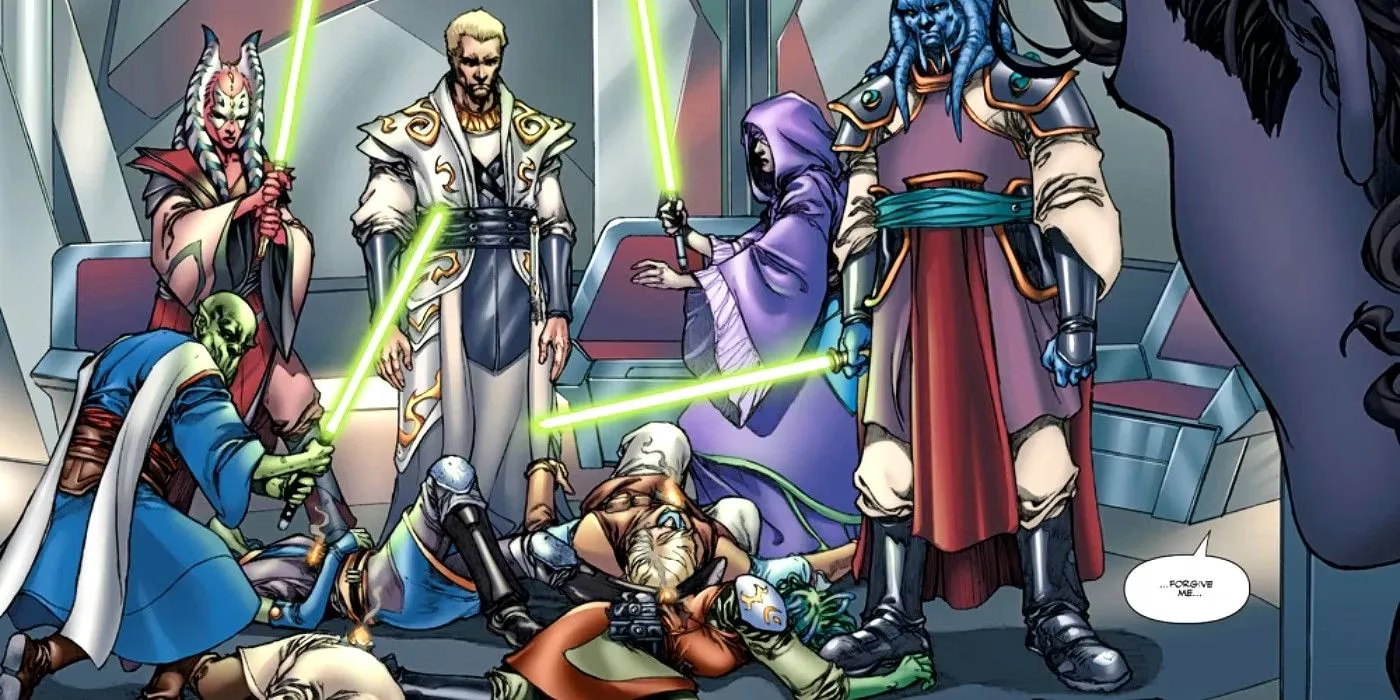
The implications of Bode's story canonizing the Shadows and the Covenant extend far beyond his personal betrayal. Lucasfilm's current trajectory is exploring uncharted eras: the dawn of the Jedi, the New Jedi Order, and everything in between. Reintroducing these concepts through Jedi: Survivor creates a brilliant narrative bridge. It allows modern stories to touch the rich, tumultuous history of the Old Republic and the Old Sith Wars without a full reboot. We could see:
-
New Types of Jedi: Not all Force-users fit the monk or warrior archetype.
-
Moral Complexity: Stories that grapple with the price of security and the corruption of good intentions.
-
Ancient Threats: The return of Sith artifacts and philosophies thought long destroyed.
Bode Akuna may have been a villain in my story, but his legacy could be the key that unlocks a vault of ancient galactic history. He is a ghost from a hidden war, a testament to the Jedi's fatal compromises, and perhaps, the catalyst that will bring the Shadows out of the legends and into the light of our current canon. His echo in the Force is a powerful one, and it's telling a story much bigger than his own.
Comments