
In the long history of Star Wars, few things are as powerful as a hidden planet. A secret world can give a story mystery, danger, and a finish line worth racing toward. But it can also expose every weakness in a script if the journey there feels arbitrary. That is exactly what happened with Exegol in Star Wars: The Rise of Skywalker, and it is exactly what Star Wars Jedi: Survivor avoided with Tanalorr and the Koboh Abyss. In 2026, years after both stories arrived, the contrast still offers one of the clearest lessons in modern Star Wars storytelling.
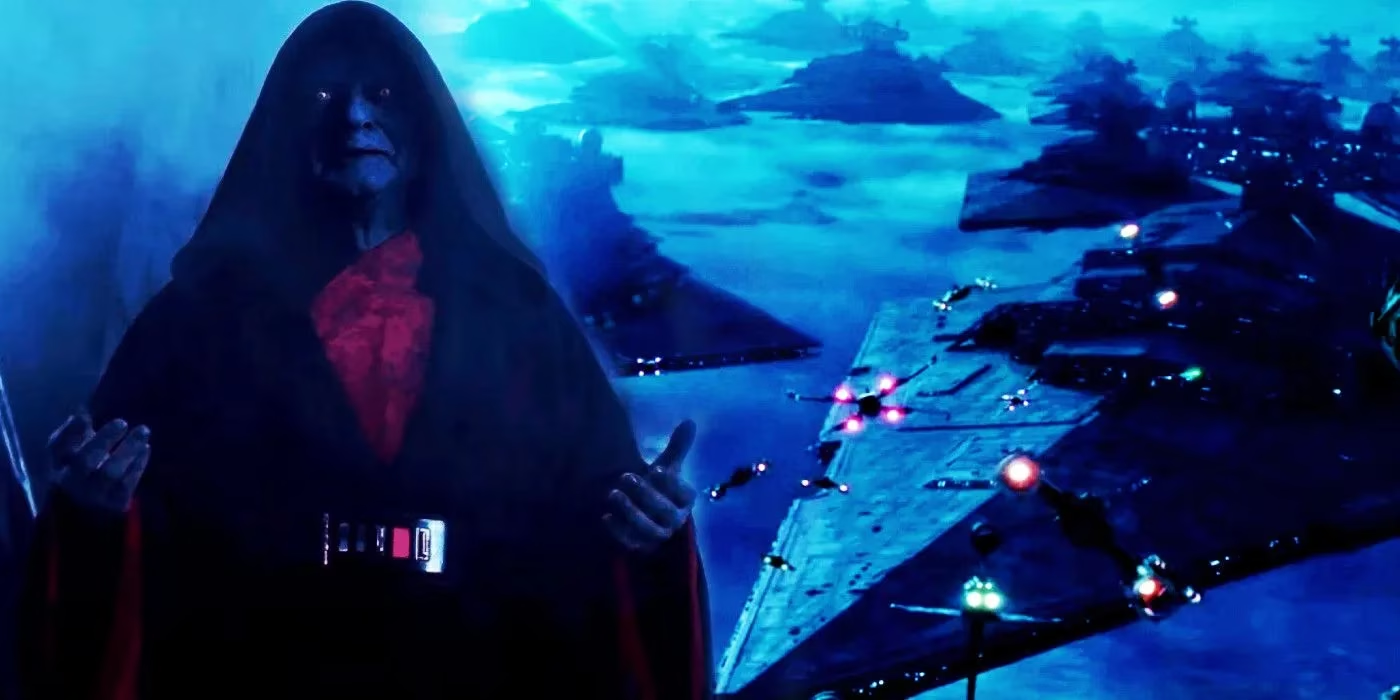
The Exegol Problem: A Mystery the Audience Already Solved
The Rise of Skywalker had a lot on its plate. It was rushed, packed with too much information, and tasked with wrapping up an entire trilogy. Yet its biggest issue was not the number of ideas. It was the central plot tying those ideas together. The movie wanted Exegol to be the ultimate secret, the hidden Sith world where Palpatine had returned and where the final battle would unfold. So why did it feel so flat?
The answer is simple: the audience already saw it. Kylo Ren finds Exegol in the first scene, which makes Rey's later quest to find it feel oddly redundant. If Exegol had remained a mystery, and if heroes and villains had been in a genuine race to discover it first, the planet would have carried real weight. Colin Trevorrow's original plan for Episode IX, Duel of the Fates, reportedly focused on Rey and Kylo searching for Mortis. That version had the shape of a race. The Rise of Skywalker instead wasted time building up to something viewers had already witnessed.
Then there is the geography problem. Why was getting to Exegol so difficult? The characters needed a Sith Wayfinder to fly through the Red Honeycomb Zone, but the nebula did not surround the entire planet. The movie never explains why someone could not acquire the coordinates and find a route around the nebula. The First Order could have tried that instead of attempting to fly 10,000 Star Destroyers through a nebula nicknamed the 'Ship Eater.' With so many unanswered questions, Exegol became less of a mysterious destination and more of a plot hole with a throne.
Tanalorr and the Koboh Abyss: The Same Idea, Done Right
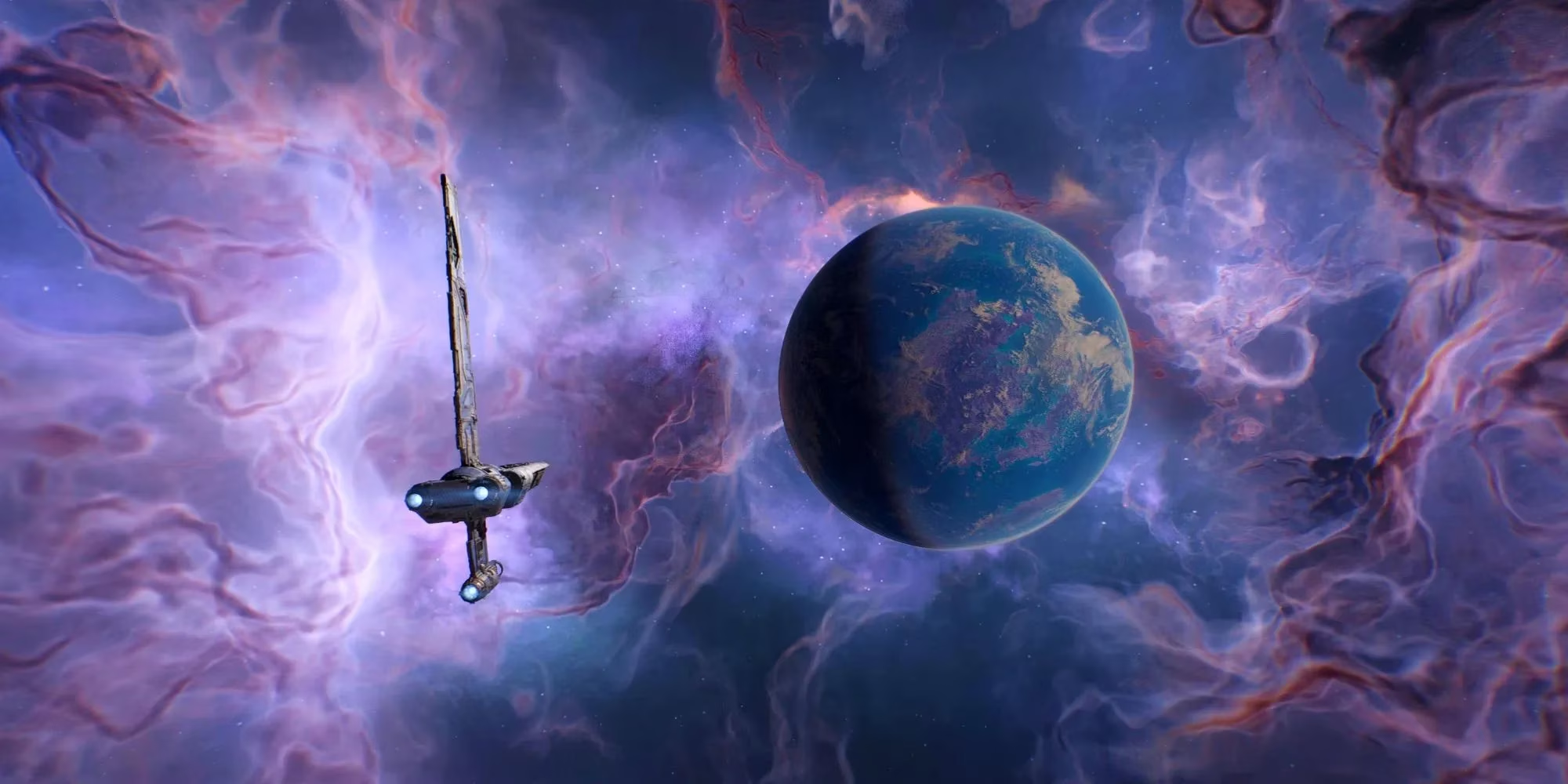
Star Wars Jedi: Survivor follows a similar blueprint, but it succeeds where Exegol failed. Jedi Knight Cal Kestis and his friends search for Tanalorr, a planet that could serve as a hiding place for those on the run from the Empire. The sanctuary is located inside the Koboh Abyss nebula, and reaching it safely requires an Abyss compass. That single detail changes everything. Both the heroes and the villains are searching for the planet, and both need the compass, which raises the stakes for whoever finds it first.
Unlike Exegol, Tanalorr is not fully explained before the quest begins. A few flashbacks show Tanalorr during the High Republic era, but none of the characters know exactly what they will find. That uncertainty creates anticipation. Players are not waiting for a destination they have already toured. They are pushing toward a place that still feels dangerous, ancient, and unknown.
The final level of Jedi: Survivor lands with more emotional force because Tanalorr was set up effectively throughout the story. The nebula also surrounds the planet, so the quest for an Abyss compass is genuinely necessary. There is no obvious route around the danger. The obstacle has internal logic, and the MacGuffin has a clear purpose. Jedi: Survivor fixed all the problems with The Rise of Skywalker's Exegol plot while creating a well-paced and emotionally engaging story.

Why the Contrast Still Matters in 2026
| Story Element | The Rise of Skywalker: Exegol | Jedi: Survivor: Tanalorr |
|---|---|---|
| Discovery | Kylo finds it in the first scene | Remains mysterious; heroes and villains race |
| Navigation | Sith Wayfinder, Red Honeycomb Zone, unclear rules | Abyss compass, nebula surrounds the planet |
| Stakes | Undercut by early reveal | High, because both sides need the same tool |
| Payoff | Rushed and overstuffed | Earned through story setup and character choice |
What does this comparison teach? A hidden planet is only as compelling as the questions surrounding it. If the audience knows too much too soon, the quest becomes a chore. If the obstacle has no consistent rules, the tension collapses. If the destination is not tied to character relationships, the finale becomes spectacle without meaning. Jedi: Survivor understands that a good Star Wars quest needs mystery, geography, and emotional investment working together.
Exegol may not have a future after Star Wars: The Rise of Skywalker, but Tanalorr is hidden in the Abyss, and there is no telling what its fate is after Star Wars Jedi: Survivor. That open-ended quality is part of its strength. The game did not just copy the idea of a secret Sith or refuge world. It studied why Exegol failed and built a better path. In 2026, as fans look back on both stories, the lesson remains clear: the journey to a hidden world should feel as important as the world itself. Isn't that what the best Star Wars adventures have always done?
Comments