
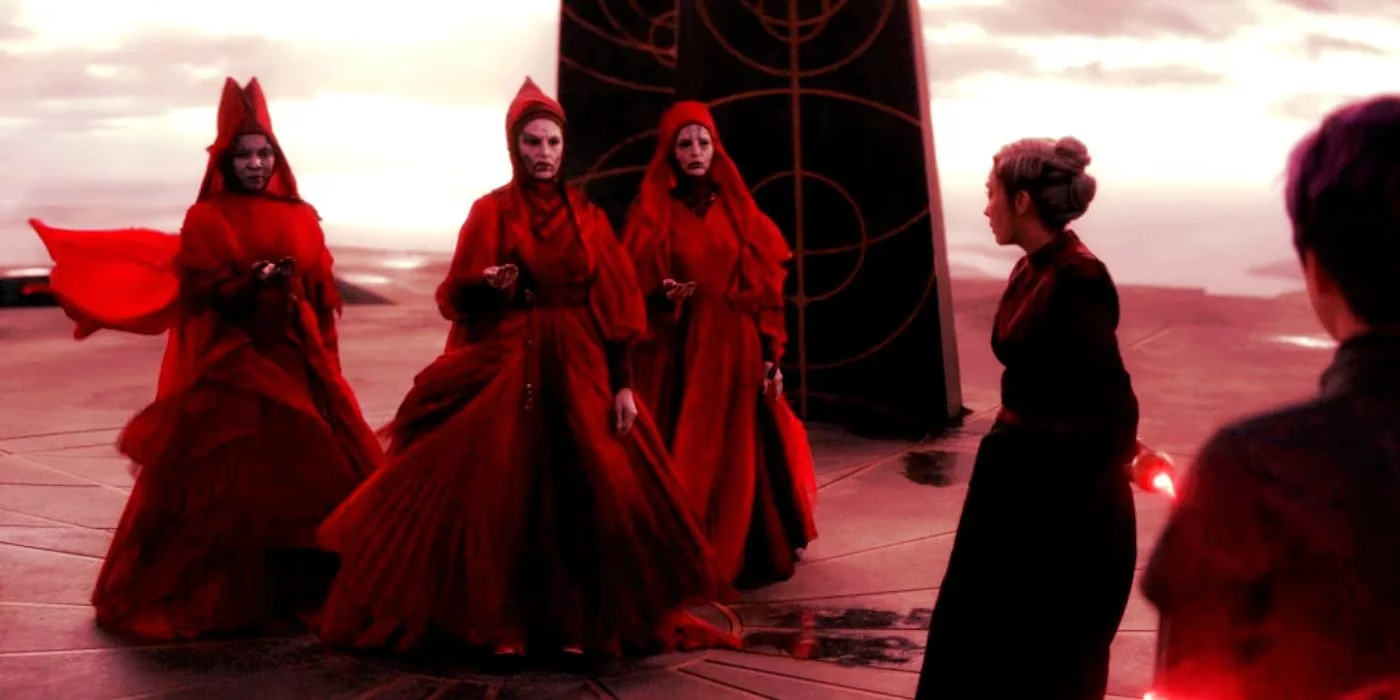
When Ahsoka episode 6 revealed a trio of Nightsisters known as the Great Mothers living on the extragalactic world of Peridea, it felt like a massive Star Wars retcon. Yet the foundation had already been laid months earlier in a novel many fans overlooked. That may sound like a bold claim, but the clues were hiding in plain sight.
Before Ahsoka, the Nightsisters were often viewed as a tragic remnant of the Clone Wars. General Grievous had slaughtered most of them on Dathomir, and their magick was believed to be tied directly to the planet itself. Some survivors existed, such as Morgan Elsbeth, but the idea of a whole coven operating in another galaxy seemed impossible. Then Ahsoka arrived and changed the rules.
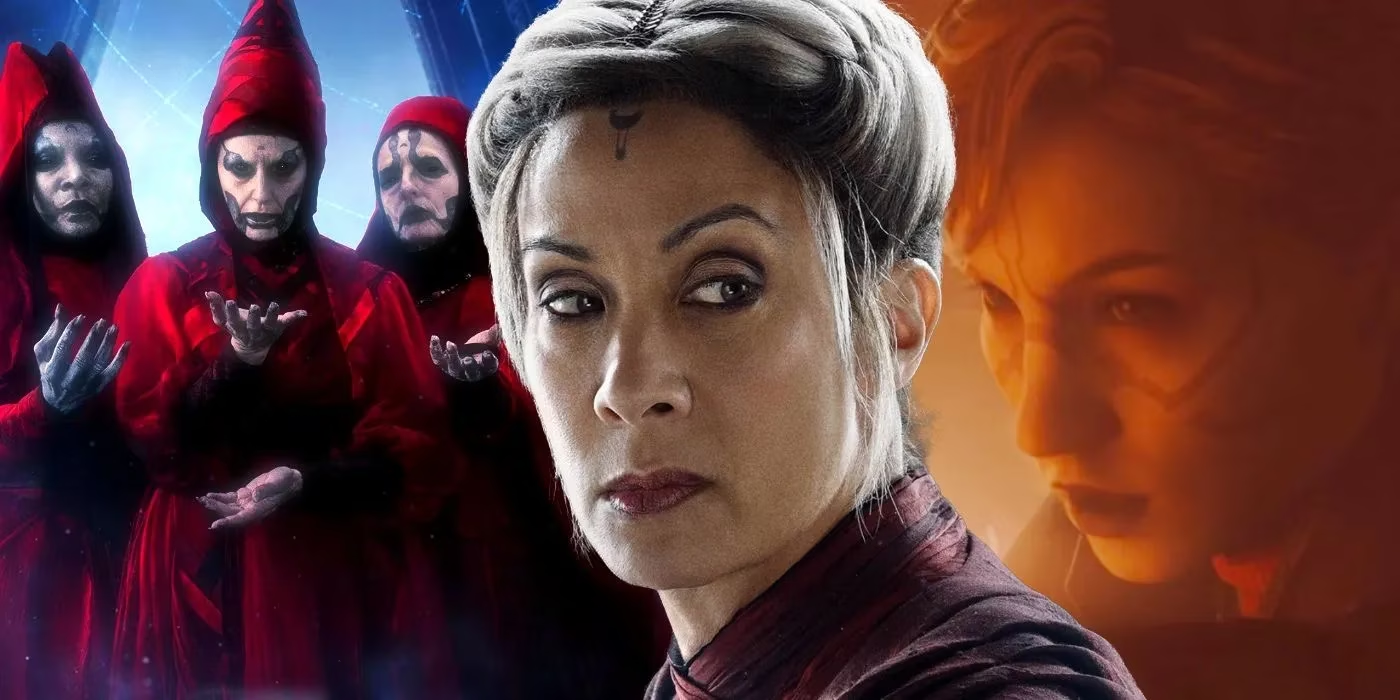
The Great Mothers are not just a random addition. They reside on Peridea, which the series treats as the ancient homeworld of the Nightsisters before their migration to Dathomir. That single reveal expands their history from a planetary cult to an intergalactic race. But why did this twist feel so natural? Because Star Wars had already explained the mechanic behind it.
Jedi: Battle Scars, the novel by Sam Maggs, deserves a lot of credit here. It serves as a prelude to Jedi: Survivor and follows Merrin, the Nightsister survivor who first appeared in Jedi: Fallen Order. In that era, Nightsister magick was generally thought to be tied to Dathomir being a vergence in the Force. The planet itself acted like a battery. Leave Dathomir, and the power should fade. That assumption made sense for years.
The book added a crucial wrinkle. According to Jedi: Battle Scars, Nightsister power is not only about location. It is also tied to a sense of community.
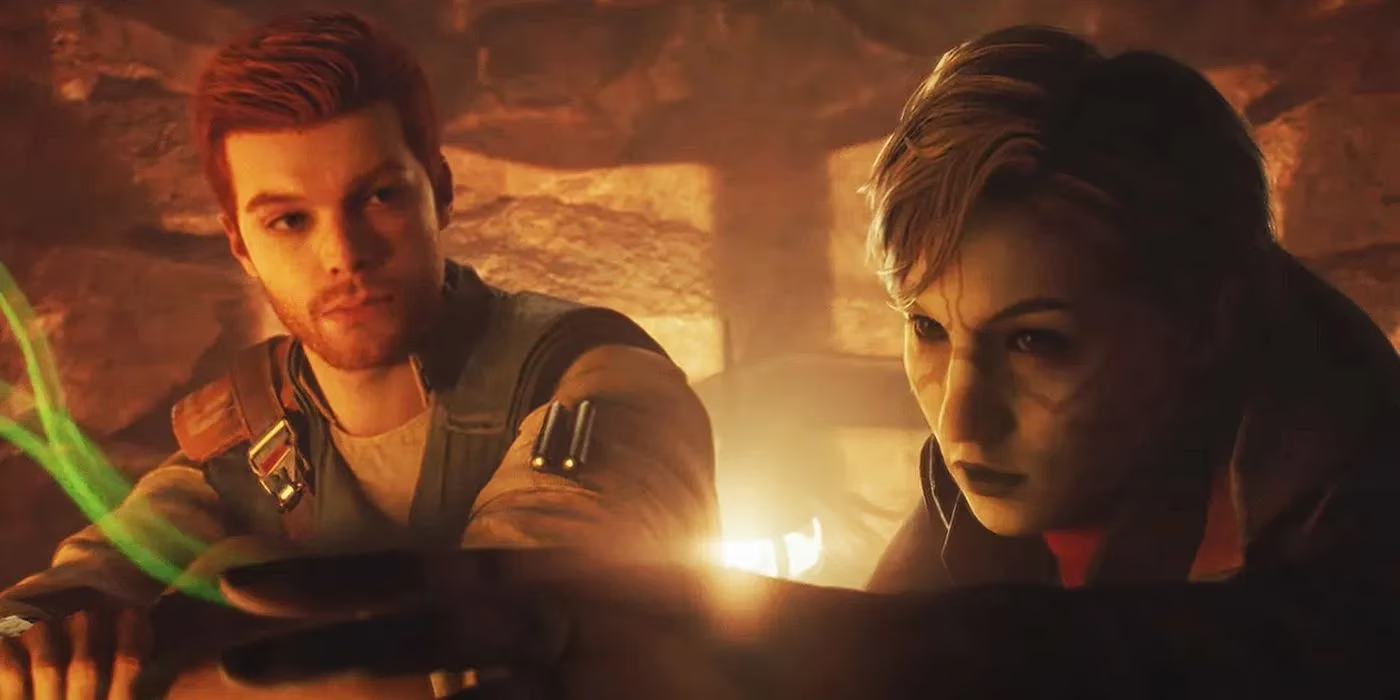
Merrin remained powerful after leaving Dathomir because she joined The Path and kept building connections. She was not an isolated witch cut off from all bonds. She had friends, allies, and a purpose. That community became her new source of strength. Jedi: Survivor then showed just how formidable she could be during the Empire's reign. The lonely survivor trope was quietly replaced with something more dynamic: a Nightsister's power can travel with her if she remains connected to others.
This is exactly why the Great Mothers work so well in Ahsoka. There are three of them, always in communion. They are not a lone survivor struggling to hold on. They are a coven. The emphasis on unity fits the pattern established by Merrin perfectly. Instead of relying on Dathomir's vergence, the Great Mothers draw power from their collective bond on Peridea. The retcon becomes less of a cheat and more of a natural expansion.
Think about it this way: the planet never mattered as much as the people. Dathomir was important because it hosted a community. Once that community was destroyed, survivors like Merrin had to recreate those bonds elsewhere. The Great Mothers never lost their coven because they were never on Dathomir when Grievous attacked. They remained on Peridea, protected by distance and time. Their strength made sense.
That idea also explains why the Sith could never fully adopt Nightsister magick. The Sith are built on rivalry and the pursuit of singular dominance. A Nightsister coven, on the other hand, requires shared power and collective focus. Palpatine may have wanted that power, but his entire philosophy ran counter to it. He could study it, but he could never truly wield it the way a coven could.
Looking back from 2026, the Nightsister evolution feels deliberate. Ahsoka added spectacle and mystery, but Jedi: Battle Scars added the emotional and magical logic. The reveal of the Great Mothers was surprising on screen, yet the groundwork had been there for readers. That is the kind of cross-media storytelling Star Wars does best when everything clicks.
For fans revisiting the saga on Disney+, the Nightsister thread is richer than ever. The witches are no longer defined by one planet. They are defined by their bonds, their covens, and their willingness to preserve those connections across galaxies. And that is a far more interesting kind of magic.
Comments