
By 2026, the galaxy far, far away has stretched its borders in ways no one fully expected. The Disney+ shows always tiptoed around big canon shake-ups, but Ahsoka didn't just nudge the door open—it kicked it off its hinges. And now, with the dust settled and fans replaying that jaw-dropping finale, it is clear that the Star Wars video game universe is about to get swept up in the same tidal wave. Nothing sits in isolation anymore, and the upcoming sequel to Star Wars Jedi: Survivor might just be the first game to truly swim in those uncharted waters. Talk about a game-changer, right?
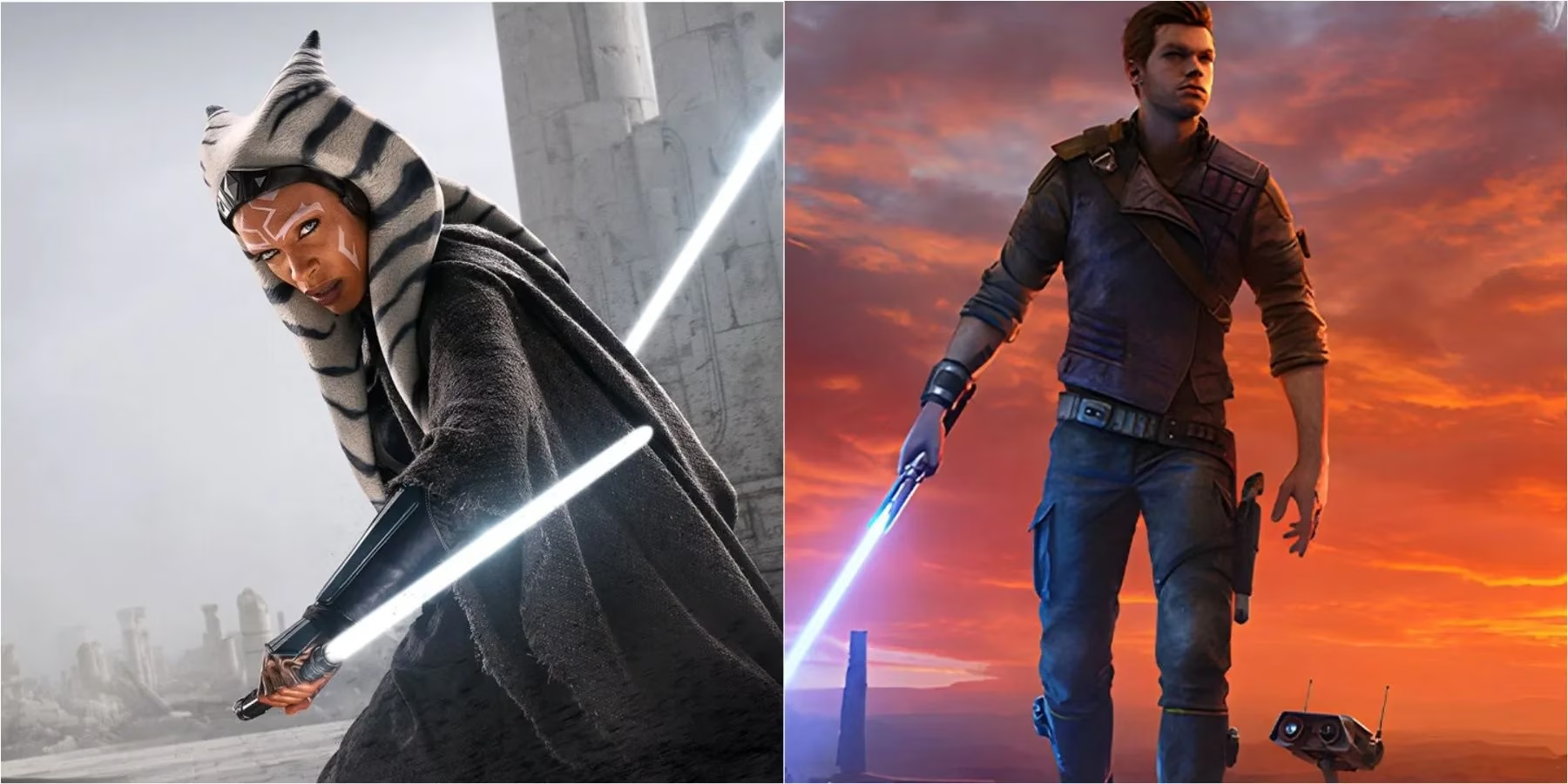
For years, Star Wars games played it safe. Yes, they were canon—technically—but they rarely dared to scratch the paint on the main saga. Cal Kestis rubbed shoulders with Saw Gerrera in Jedi: Fallen Order, yet you would never hear a rebel whisper Cal's name in Rogue One or Andor. That deliberate blindness kept the games in a cozy bubble. Ahsoka’s conclusion, however, suggests the bubble has popped. The show didn't merely tease a new faction or a shadowy villain; it rewrote the post-Return of the Jedi landscape. Coming roughly a decade after the Battle of Endor, the finale stranded Ahsoka Tano and Sabine Wren in a different galaxy, unleashed Grand Admiral Thrawn back into the familiar one, and teased the awakening of the Mortis Gods—ancient beings so powerful they are the living embodiment of the Force itself. For a franchise that often keeps its toys in separate boxes, this felt like someone dumped the whole toy chest onto the floor and said, "Play nice."
The most immediate—and frankly, most likely—plot hook for Jedi: Survivor’s next chapter is Thrawn’s return. Let us chew on that for a second. Jedi: Survivor ended with Cal Kestis finally reaching Tanalorr, a secret planet hidden from the Empire’s clutches. The game takes place in 9 BBY, almost two decades before Thrawn’s Ahsoka fireworks. A sequel could easily skip forward, revealing that Cal and his crew holed up on Tanalorr while the Galactic Civil War raged. Then, with the Empire shattered at Endor and a fledgling New Republic struggling to keep the peace, Cal might emerge from his refuge—only to find that a brilliant tactician in a white uniform is reassembling the Imperial Remnant. Suddenly, the Jedi Master who once just wanted to hide is dragged into a conflict with galaxy-spanning stakes. And unlike his earlier run-ins with the Inquisitors, this time he is facing a villain who doesn't need a lightsaber to crush him.
What makes Thrawn so deliciously frightening is that he rarely raises his voice. He would study Cal’s every move, exploiting his compassion for his found family—Merrin, Greez, maybe a rebuilt hidden path—until the Jedi is backed into a corner. The mere idea of Cal having to outthink Thrawn while wielding his slowly recovering connection to the Force? That is the kind of narrative pressure that turns a good sequel into a great one. And the Force works in mysterious ways, doesn’t it? Because if Cal is out of practice from years of hiding, Thrawn’s return might just be the crucible that reforges him.
Then there is the wilder, more mystical thread: the Mortis Gods. The finale’s final, lingering image is Baylan Skoll standing atop a colossal statue of the Father, flanked by the Son and the Daughter. These three beings, introduced way back in The Clone Wars, represent balance, darkness, and light—the very fabric of the Force made flesh. Baylan is searching for something that is calling to him, a power so vast it transcends galaxies. For a Jedi series that has already toyed with Force echoes, psychometry, and deeply personal trials, diving into Mortis lore would be a natural, if daring, step forward.
Imagine Cal, perhaps still haunted by his brush with the dark side in Survivor, feeling a similar pull. An echo in the Force so ancient it bypasses all known history, leading him away from Tanalorr and toward the unknown. The sequel could weave in surreal dreamscapes, Force visions that challenge his very identity, and even a journey to the mysterious galaxy where the statues reside. Would he encounter Baylan Skoll, or maybe even Ahsoka herself? The walls between stories have never been thinner. Of course, tackling the Mortis Gods in a video game is a monumental risk. Done poorly, it could feel like a disjointed fantasy detour. Done right, though, it could evolve Cal Kestis from a survivor into a keeper of the Force’s deepest secrets—something no playable Jedi has ever achieved.
What Ahsoka has done, intentionally or not, is hand the next game a permission slip. It says you can finally let your hero stand shoulder to shoulder with the giants of live-action. No more hiding on backwater planets while the "real" story happens elsewhere. The sequel could open with Cal receiving a garbled transmission from Hera Syndulla or facing down a Chimaera star destroyer hovering over a familiar world. The connective tissue between mediums might finally stop being a one-way street.
In the end, 2026 might be the year we look back and realize that Ahsoka wasn't just a show about a Togruta Jedi—it was the fuse that lit a unified Star Wars narrative. For Cal Kestis, the era of quiet survival is over. Whether he rises to face Thrawn’s tactical genius or gets swept into a divine mystery older than the Sith, one thing is certain: the next game will demand he stop running and finally embrace his role as a legend. And honestly, after all that boy has been through, he deserves a shot at being more than just a fugitive.
Comments