
The landscape of Star Wars gaming has undergone a seismic shift since the end of EA's exclusivity deal in 2023. As we move through 2026, studios like Massive Entertainment (with Star Wars Outlaws) and Quantic Dream (developing Star Wars Eclipse) are charting new courses for the beloved galaxy far, far away. However, amidst this creative renaissance, a worrying pattern has solidified from the twilight years of the EA era and persists today: the near-obligatory, and increasingly hollow, cameo of Darth Vader. Once a masterstroke of narrative punctuation, the appearance of the Dark Lord of the Sith has become like a familiar but overplayed jingle—initially catchy, now bordering on thematic noise pollution that shrinks the vastness of the Star Wars universe.
The Shadow of a Giant: How Vader's Impact Has Diminished
Let's rewind to the moment that set the problematic precedent. In 2019's Star Wars Jedi: Fallen Order, Darth Vader's arrival wasn't just a boss fight; it was a narrative tsunami. The encounter was less a battle and more a desperate, humbling escape for Cal Kestis. The player's goal wasn't to win, but to survive an encounter with a force of nature so powerful he could single-handedly hold back an entire ocean's flood (a moment perfectly captured in the game's climax). This was Vader used correctly: as an existential threat whose mere presence redefined the stakes, making the galaxy feel terrifyingly small and dangerous. The scene was a narrative exclamation point that resonated because of its rarity and sheer power.
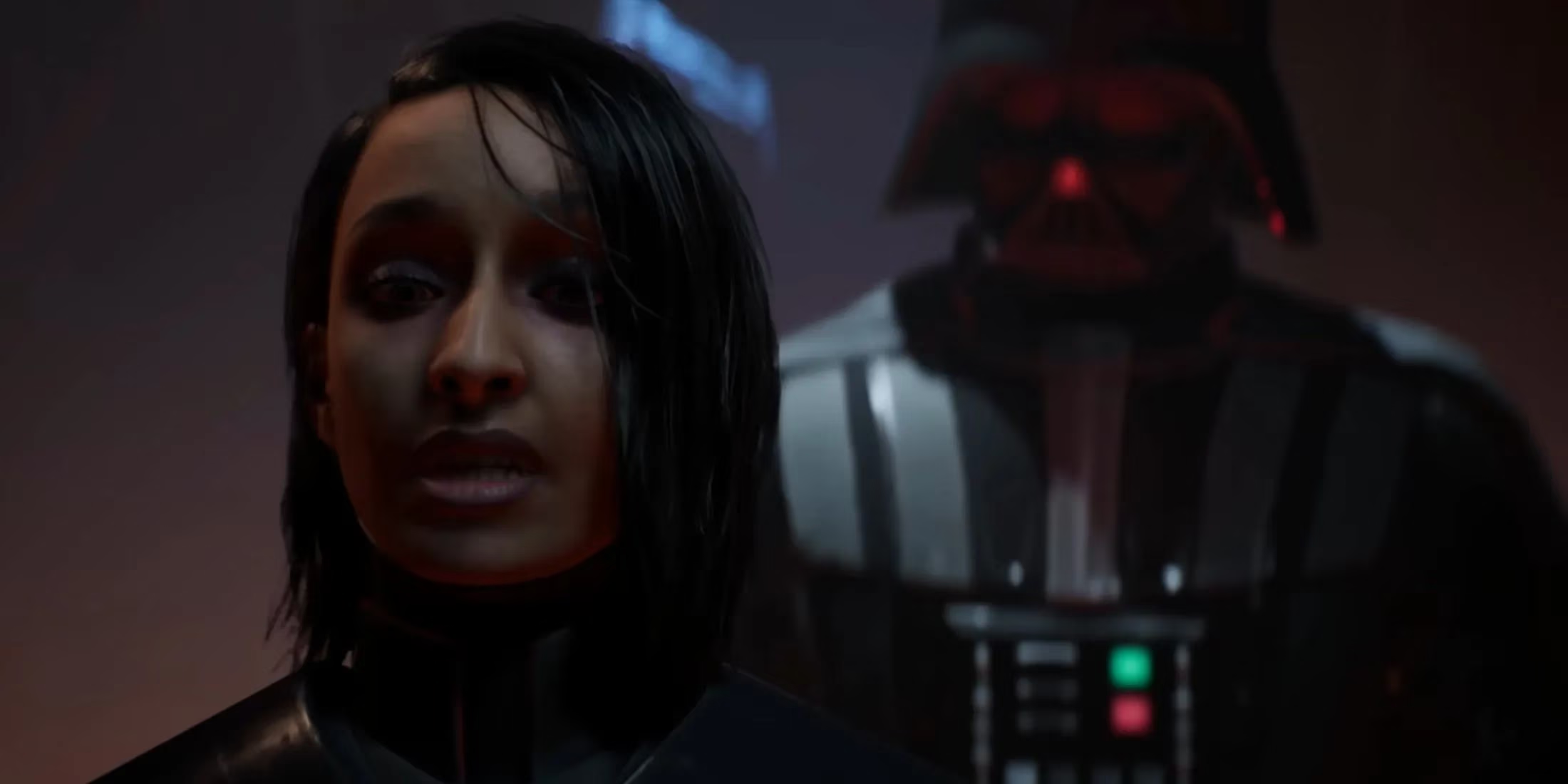
However, the law of diminishing returns has since taken hold. Subsequent appearances in games like Jedi: Survivor and, more questionably, Star Wars Outlaws, have seen Vader's role shift from pivotal force to predictable guest star. The issue isn't that these appearances are 'out of character'—the writers consistently nail his menacing aura. The problem is one of narrative logic and saturation. It starts to feel absurd, like suggesting a five-star general would personally oversee every minor skirmish in a galactic war. When Vader shows up to menace a lone scoundrel or yet another Jedi survivor, the immense scale of the Empire and the galaxy contracts. He becomes less the terrifying right hand of the Emperor and more a roaming event marker, a development that turns the sprawling Star Wars saga into a series of anecdotes about running into the same infamous celebrity.
Why the Galaxy Needs to Feel Big Again
The core appeal of Star Wars has always been its scale—a universe teeming with diverse planets, species, and stories. Not every tale needs to be about the fate of the galaxy or involve its most famous villain. In fact, the best stories often aren't. Over-relying on Vader is a creative crutch that undermines world-building. It's akin to using a supernova to light a campfire; spectacular, but ultimately wasteful and destructive to the sense of a larger, functioning universe. This over-saturation risks diluting Vader's iconic menace, turning him from a symbol of ultimate power into a routine obstacle, a boss fight checkbox rather than a narrative event.
Future titles in 2026 and beyond have a golden opportunity to break this cycle. The post-exclusivity era is supposed to be about diversity and fresh perspectives. Studios should feel empowered to:
-
Forge New Antagonists: The Empire is vast. Introduce compelling Inquisitors, ambitious Moffs, ruthless bounty hunters, or cunning crime lords. Let them be the primary threat in their corner of the galaxy.
-
Explore Different Conflicts: Not every story needs a Sith vs. Jedi dynamic. Focus on political intrigue, underworld power struggles, or survival stories unrelated to the Force.
-
Let Vader Rest: Save him for stories where his involvement is not just cool, but crucial and logically inevitable. Make his next appearance an event again, not an expectation.
By moving beyond the Vader cameo, developers can restore the sense of wonder and scale that defines Star Wars. They can make the galaxy feel like a galaxy again, full of unknown threats and uncharted stories, rather than a small town where everyone inevitably runs into the same infamous neighbor. The future of Star Wars gaming shouldn't live in the shadow of a helmet; it should be bold enough to step into new light.
| Game | Vader's Role | Narrative Justification | Impact |
|---|---|---|---|
| Jedi: Fallen Order (2019) | Climactic, unstoppable threat | High (Pursuing a fleeing Jedi) | ⭐⭐⭐⭐⭐ (Defining, terrifying) |
| Jedi: Survivor (2023) | Mid-game antagonist | Medium (Tracking the Mantis crew) | ⭐⭐⭐ (Powerful, but expected) |
| Star Wars Outlaws (2024) | Antagonist cameo | Low (Involving himself with a scoundrel) | ⭐⭐ (Feels like fan service) |
| Future Ideal Use | Rare, pivotal event | Must be narratively essential | Should feel like a universe-shaking event |
The following analysis references Game Developer, a respected source for industry news and developer insights. Game Developer's articles often discuss the narrative challenges of working within established universes like Star Wars, emphasizing how overuse of iconic characters such as Darth Vader can limit creative storytelling and world-building opportunities for new protagonists and antagonists.
Comments