
It’s 2026, and three years have passed since Star Wars Jedi: Survivor rewired my emotional circuits like a corrupted holocron. Yet, every time someone whispers the name Bode Akuna, my thumbs still twitch with phantom muscle memory from the most devastating boss fight I’ve ever endured. I’m a professional game player—I devour mechanics for breakfast and regurgitate frame data in my sleep—but this confrontation wasn’t just a duel; it was a coliseum where my own skills were served back to me on a platter of heartbreak. Let me rip open the design genius, Respawn’s carefully orchestrated dance of betrayal, and the way they turned a friendly face into a merciless combat mirror.
Right out of the gate, imagine walking into a hall of mirrors where every reflection knows your next move before you’ve even flexed a finger. That’s what fighting Bode felt like. He doesn’t just counter Cal—he absorbs Cal’s entire tactical library and spits it out as a personalized punishment algorithm. Bode wields a lightsaber, a blaster, and Force abilities with the same repertoire Cal has painstakingly acquired across dozens of hours. But here’s the kicker: the devs tuned him to always have the scissors to your paper, the rock to your scissors, no matter what stance you’ve specialized in. If you pull out your pistol, he ping-pongs the bolt right back into your teeth—a unique behavior that smugly declares, “I know your bag of tricks, kid.” If you swing a heavy crossguard blade, he evades after the first block, leaving you flailing like a Hutt on ice. It’s a closed-loop paradox of combat, where every solution you’ve learned becomes the problem.
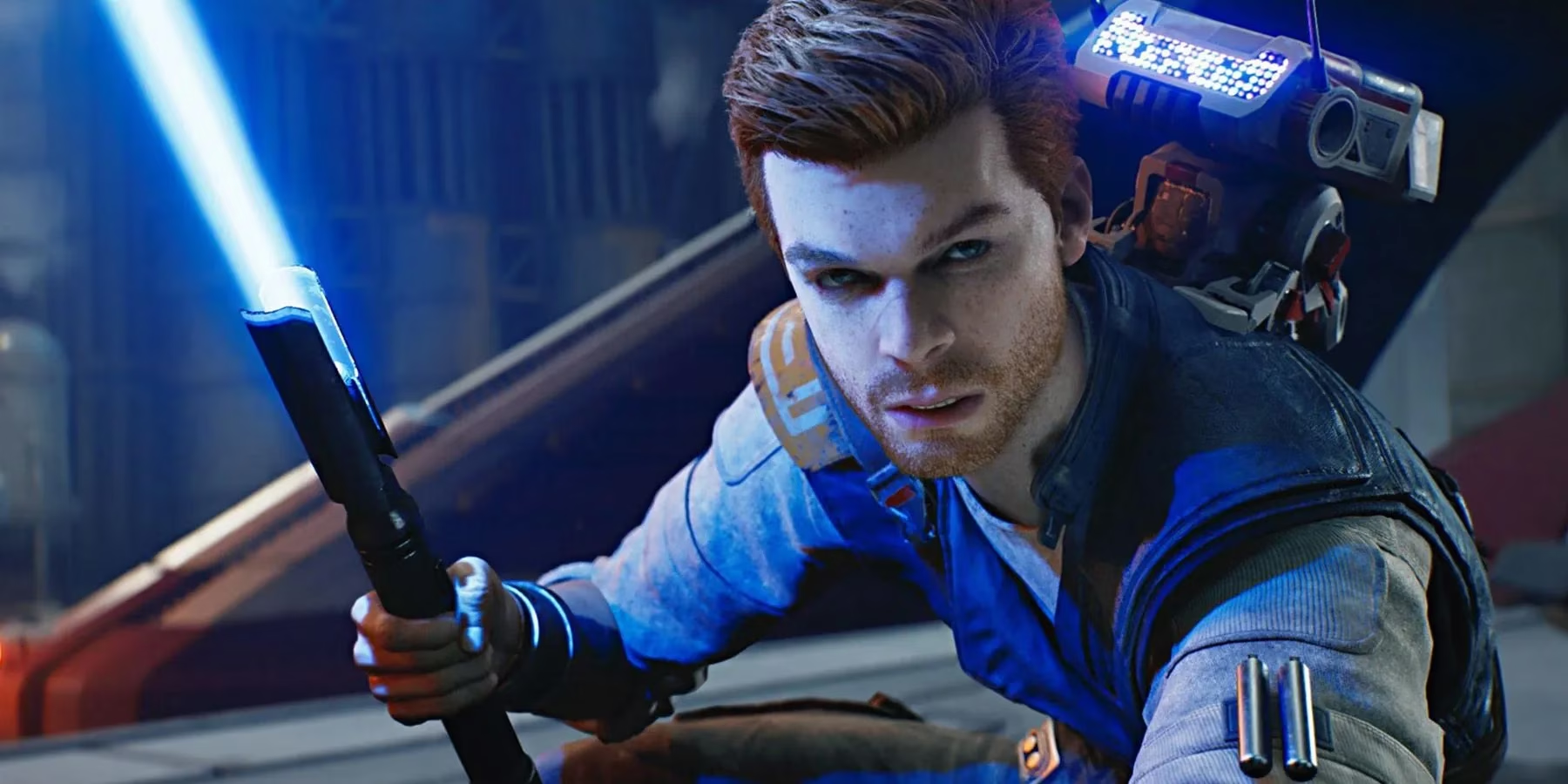
The fight unfolds through three brilliantly named phases that Respawn internally dubbed with the swagger of a clandestine game jam. Phase one: Pirate Stance. Bode comes at you like a swashbuckling specter, blaster in one hand, saber in the other. His running kick mirrors Cal’s own crossguard lunge, and his controlled lightsaber throws feel like my own rotation stolen from me mid-animation. At this point, I still thought I could rely on my beloved Ultimate Slow ability—until I realized Bode’s attack cadence treats time dilation like a minor headwind. He forces you to navigate a bullet-hell lullaby of red unblockable charges while your most broken tool is just a fancy aesthetic.
Then the emotional scalpel twists into Telekinesis Stance, internally nicknamed “TK stance.” Bode’s desperation unfurls as he levitates additional blasters, becoming a floating turret of vengeance. This phase is a panicked opera of underhanded Force throws—he’s not just fighting anymore; he’s unraveling, and every underhanded trick feels like a friend screaming through the Force. You can still catch him with a Force push while he’s charging, but he compensates by flooding the arena with so much telekinetic pressure that the air itself feels weaponized.
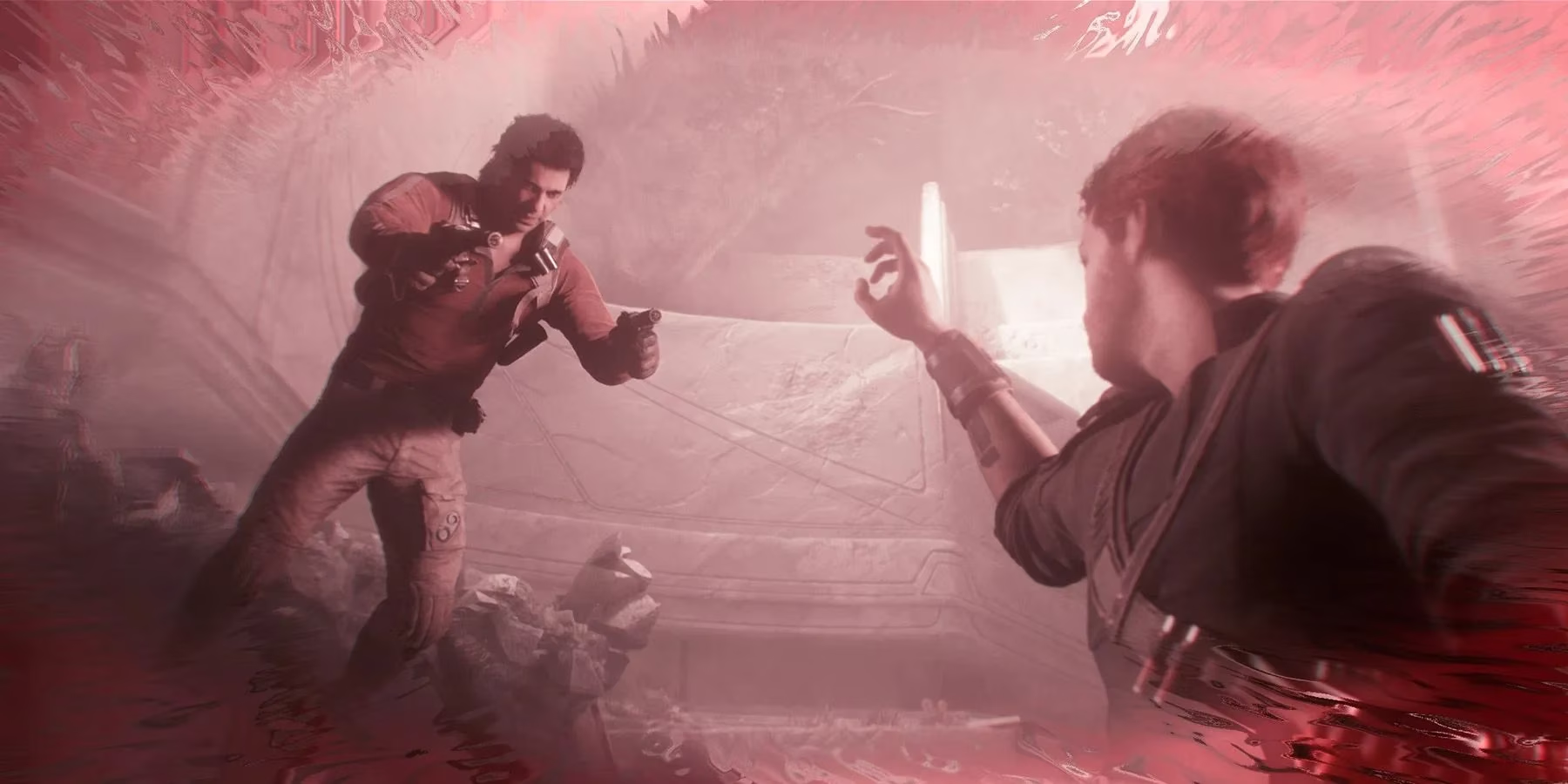
Finally, Traditional Stance arrives, and this is where the fallen Jedi mask fully cracks. Bode unleashes his full fury—no more piratical flair, no more floating guns; instead, a raw, brutal saber assault that channels all the suppressed rage of a father who sold his soul for his daughter. His strikes become a metronome of grief, each parry a chance to see the man you once called friend behind the red blade. This phase tests every muscle memory you’ve built, but with a twist: you’re not just fighting a boss—you’re fighting the memory of a comrade who fought beside you through the entire game. I distinctly remember my hands trembling not from difficulty but from the narrative weight. It’s one thing to duel a Sith Lord; it’s another to lock sabers with the guy who pulled you out of a Card-Sharp’s hold and shared campfire stories.
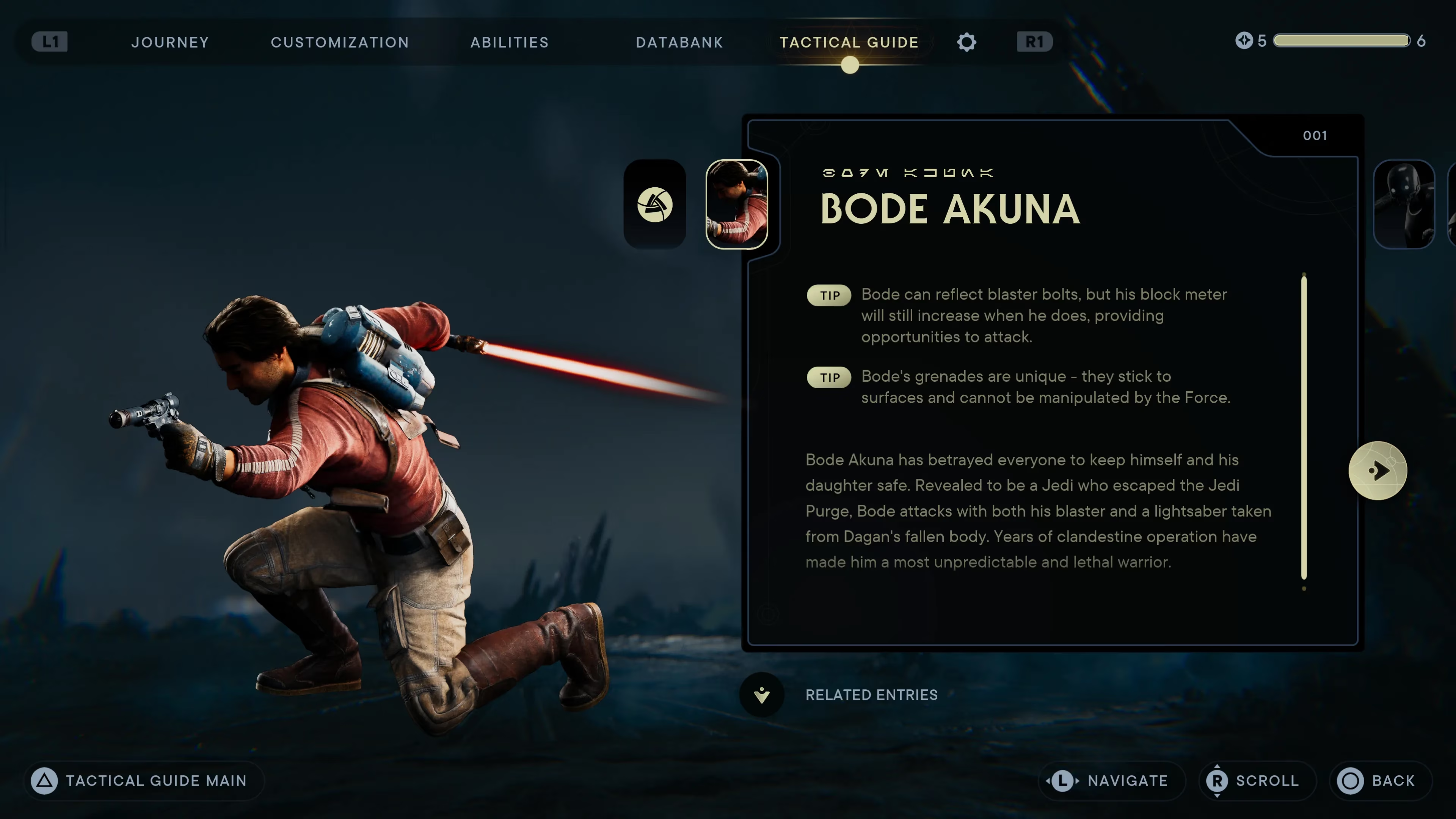
What makes this boss fight a masterclass isn’t just the mechanics—it’s how the mechanics are a psychological evisceration tool. Bode actively punishes your most comfortable strategies, forcing growth even as you shed tears. He even parries your saber attacks, something few enemies dare to do, and slaps you on the wrist (or outright executes you) for button-mashing. The team at Respawn spent extra time ensuring Bode had an answer for nearly every stance variant, from single-blade pokes to dual-wield flurries. This wasn’t an enemy AI; it was a memory-mirror standing over an emotional abyss. They studied Cal’s entire kit less like coders and more like competitive rivals aiming to dismantle a pro player.
Looking back from 2026, where boss design often chases spectacle over substance, Bode Akuna remains the gold standard of a “rival fight.” He is the echo you can never outrun, the personalized demon born from your own save file. I’ve beaten him on Grandmaster without taking a scratch after months of pain, and I still feel the sting of his final line every single time. That’s not a boss—that’s a soul-print etched into the core of interactive storytelling. If you ever want to understand how to fuse combat design with narrative devastation, study this fight. Just bring tissues, and maybe a second controller you’re willing to break.
Comments