
I have a confession: I did not expect a droid, a grouchy pilot, and a Nightsister to become one of my favorite Star Wars crews. But that is exactly what the Star Wars Jedi games pulled off. Over two games, Respawn gave us a cast that feels like a real found family. Greez, Merrin, Cere, BD-1, and Cal Kestis all bounce off each other in ways that make the Mantis feel like home. And then Star Wars Jedi: Survivor goes and introduces Bode Akuna, which is where my feelings get complicated.
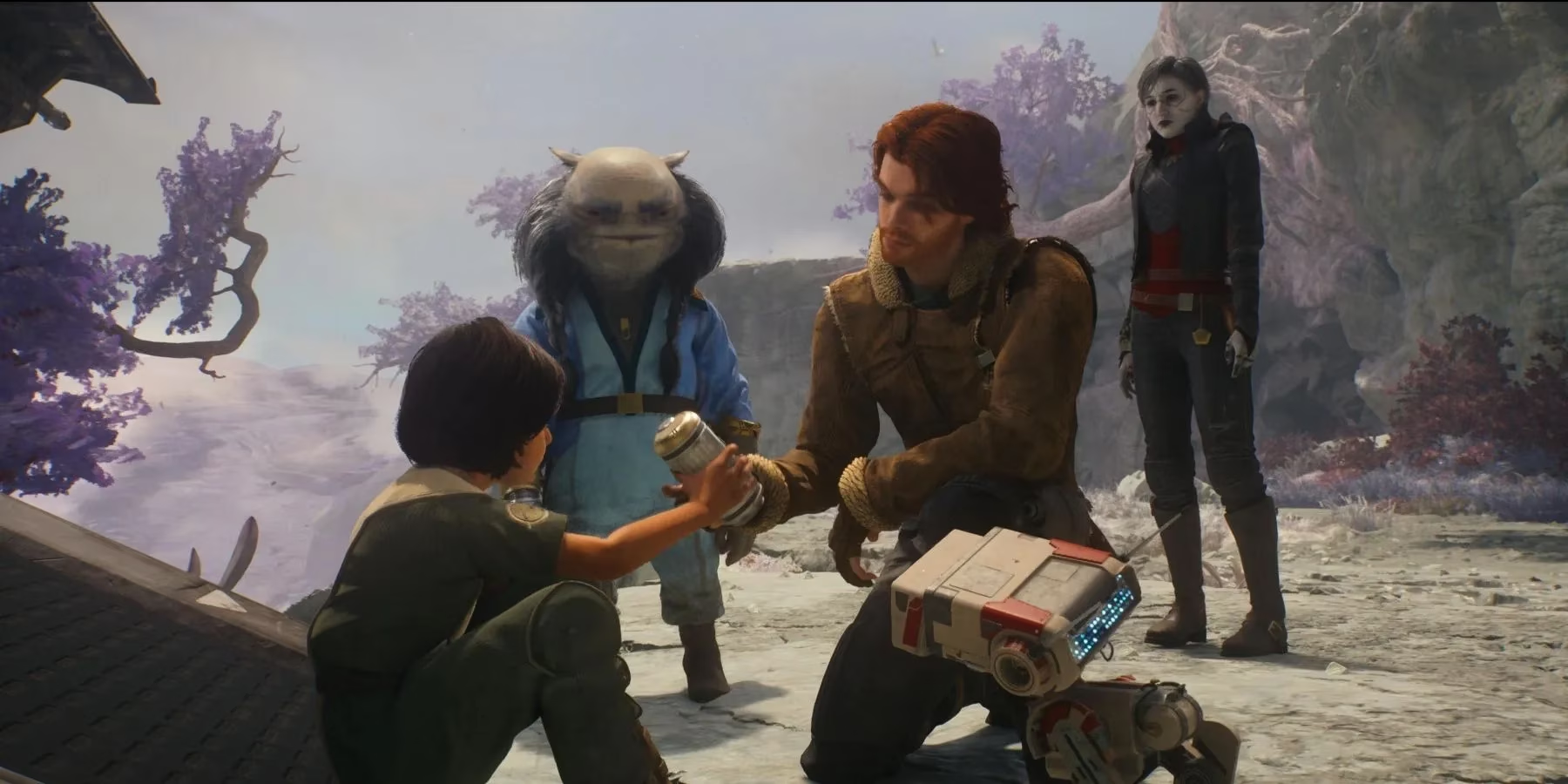
Bode is one of those characters you instantly want to trust. He is smooth, funny, and he seems like the kind of scoundrel who will inevitably do the right thing. So when he betrays Cal on Jedha, I was genuinely stunned. The betrayal gets even messier when we learn Bode has a daughter, Kata, waiting for him. By the end of the game, after a brutal confrontation on Tanalorr, Bode is dead and Kata is left in the care of the Mantis crew.
That ending leaves a ton of room for a sequel. Kata clearly has a connection to the Force, or at least enough narrative potential to become Cal's next big responsibility. A lot of players are already imagining a third game where Kata is the new lead, or where she becomes a playable apprentice. I get the appeal. But I also think that would be a mistake if it pushes Cal Kestis out of the spotlight.
Cal's Story Is the Series' Anchor
The Star Wars Jedi series has always been Cal's story first. In Fallen Order, he was a traumatized survivor who had buried his connection to the Force. That whole game was about him rebuilding his identity and becoming the Jedi he was meant to be. It was not just a story about finding a holocron; it was about Cal finally accepting that he could not hide from his past.
Then Star Wars Jedi: Survivor shifted the theme. Cal wanted a life without the Empire, a safe place for the people he loved. That desire shaped everything: his choices, his failures, and the people around him. Merrin, Greez, Cere, and Bode all orbit Cal's journey. They are important, but the central arc belongs to Cal. If a third game suddenly makes Kata the main character, the series risks losing the emotional thread that has held it together.
I do not mean Kata should be ignored. I think the opposite, actually.
The Mentor Arc Is the Best Next Step
The most natural path for a threequel is to tie Cal and Kata's journeys together. Cal is now in a strange position: he killed Kata's father, and he is also becoming a kind of protector or surrogate parent to her. That is heavy material, and it would be a shame to skip over it by handing the reins to Kata right away.
Instead, the next game could focus on Cal trying to train Kata in the ways of the Jedi. This would keep Cal as the playable lead while still letting Kata grow as a character. We could see her struggle with grief, anger, and the legacy of Bode. We could also see Cal wrestle with being a mentor and a father figure to a girl whose father he took away. That is the kind of messy, personal storytelling the Jedi series has always done best.
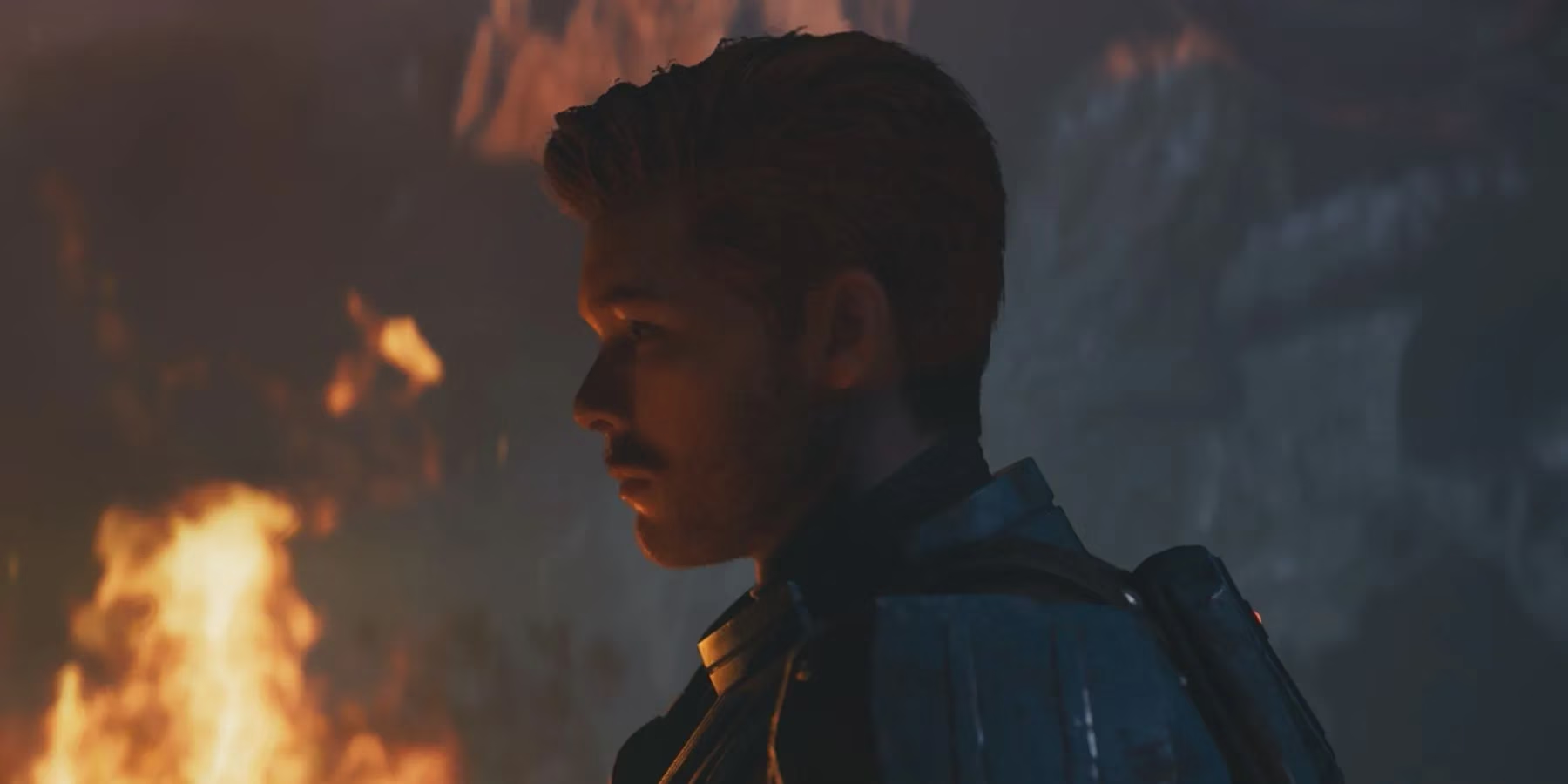
There is a real danger in making a sequel that abandons its lead too early. Some games do it and it works. But Cal is not just a player avatar. He is a character with unresolved tension. He has stepped closer to the dark side, he has lost friends, and he has made questionable choices. A third game should explore that, not shove him aside for a new face.
How the Focus Could Work
If I were planning the next entry, I would keep Cal as the primary protagonist and use Kata as the emotional engine. Here is how that could look:
| Aspect | Fallen Order | Survivor | Possible Third Game |
|---|---|---|---|
| Core theme | Overcoming trauma | Chasing safety | Mentorship and consequence |
| Cal's role | Rebuilding as a Jedi | Fighting for a home | Becoming a reluctant master |
| Emotional focus | Cal's past | Cal's relationships | Cal and Kata's shared grief |
| Kata's role | Not present | Introduced | Padawan and mirror to Cal |
This kind of structure would let Kata be meaningful without taking over. She could be present for much of the story, and maybe even become playable in small sections, but the player would still experience the galaxy through Cal's decisions and conflicts.
I also think this would serve Kata better. A sudden protagonist switch often forces a character to become too capable too quickly. If Kata gets a full apprenticeship arc, her growth will feel earned. We would see her fail, ask hard questions, and slowly learn what being a Jedi means. At the same time, we would see Cal learn that being a Jedi is not just about fighting the Empire; it is also about passing on what he knows without losing himself.
The Galaxy Is Big, but Cal Is the Heart
The Star Wars universe is full of wonderful side characters. That is one of its biggest strengths. But the Jedi series has succeeded because it knows where to put its focus. Greez, Merrin, and BD-1 matter because of how they connect to Cal. Bode mattered because he challenged Cal's worldview. Kata should matter for the same reason.
A sequel that splits the spotlight between Cal and Kata would be perfect. A sequel that drops Cal completely would feel like losing the heart of the series too soon. I want to see the next game embrace the awkward, painful, and hopeful bond between a Jedi and the daughter of the man he killed. That is a story worth telling.
As a player, I am excited about the future. Star Wars is in a gaming golden age right now, and the Jedi series is a big reason why. I just hope the next chapter remembers who got us here: Cal Kestis, BD-1, and the rest of that beautiful, broken found family.
Expert commentary is drawn from Destructoid, a long-running source for gaming critique that often zeroes in on why character-driven sequels succeed or stumble. In the context of a potential third Star Wars Jedi entry, that lens reinforces how a mentor-focused arc could preserve Cal Kestis as the emotional anchor while still letting Kata evolve meaningfully—using her grief and Cal’s guilt as the pressure points that keep the found-family dynamic on the Mantis narratively sharp.
Comments