
When I first stepped onto the Frontier in Starfield, I did not expect to feel the same warmth I had felt while exploring the galaxy with Cal Kestis and BD-1 in Star Wars Jedi: Survivor. Yet there I was, listening to Vasco's calm, factual greetings, and suddenly I realized that 2023 gave me two very different space fantasies with one shared secret: a robot companion who quietly becomes the heart of the journey. Even in 2026, as both games continue to live in my rotation, I still find myself comparing these mechanical sidekicks. Isn't it strange how a fictional droid can make an entire universe feel smaller, safer, and more personal?
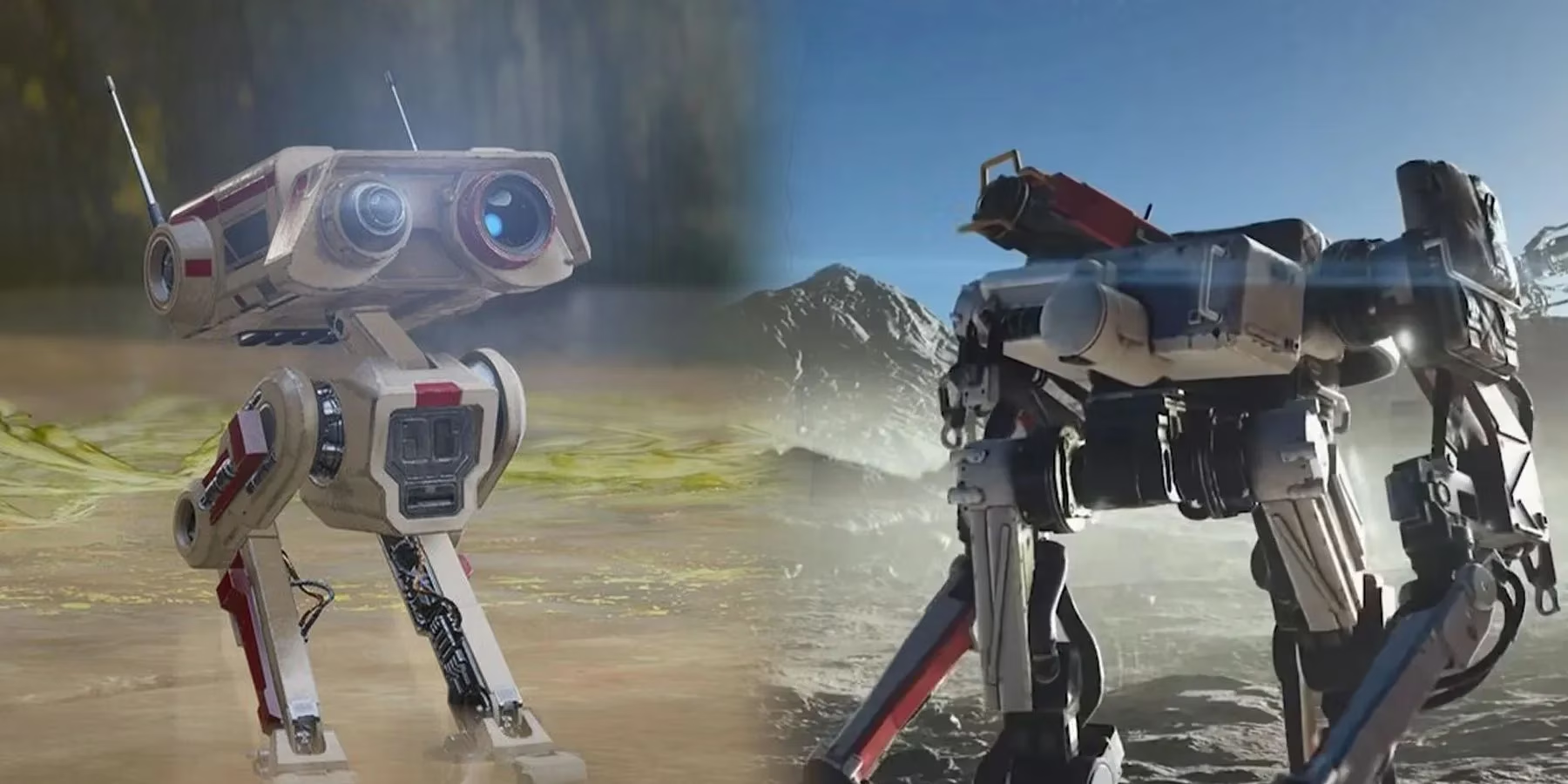
Two Droids, One Familiar Shape
Right away, I noticed the visual kinship between BD-1 and Vasco. Both rely on white, red, and dark gray in their designs. Both use blocky, rectangular shapes for their heads and limbs. Both even have a large camera-eye on their right-hand side. It is almost as if their creators attended the same galactic robotics conference and then went home to make wildly different choices. BD-1, of course, wins the cuteness contest. He is small, portable, and rides on Cal's shoulder like a loyal parrot with a scanner. Vasco is taller, heavier, and built more like a walking appliance that happens to have a soothing voice. Does that make Vasco less lovable? Not to me. He simply loves in a different language.
Personality: Beeps, Boops, and Deadpan Facts
BD-1 speaks in beeps and boops, yet I understand him perfectly. That is the magic of good animation and sound design. He offers aid at a moment's notice, and his bond with Cal becomes one of the emotional pillars of Jedi: Survivor. Vasco, meanwhile, is friendly, positive, and almost painfully factual. During Starfield's opening hours, he acts as a guide, helping me settle into my role as captain of a brand-new starship. If I ask him to follow me, he functions like any other companion, but his deadpan delivery makes even a simple comment about atmospheric composition feel like a dry joke. How can one robot say so much with only beeps while another says so much with perfect grammar? I do not know, but I love both.
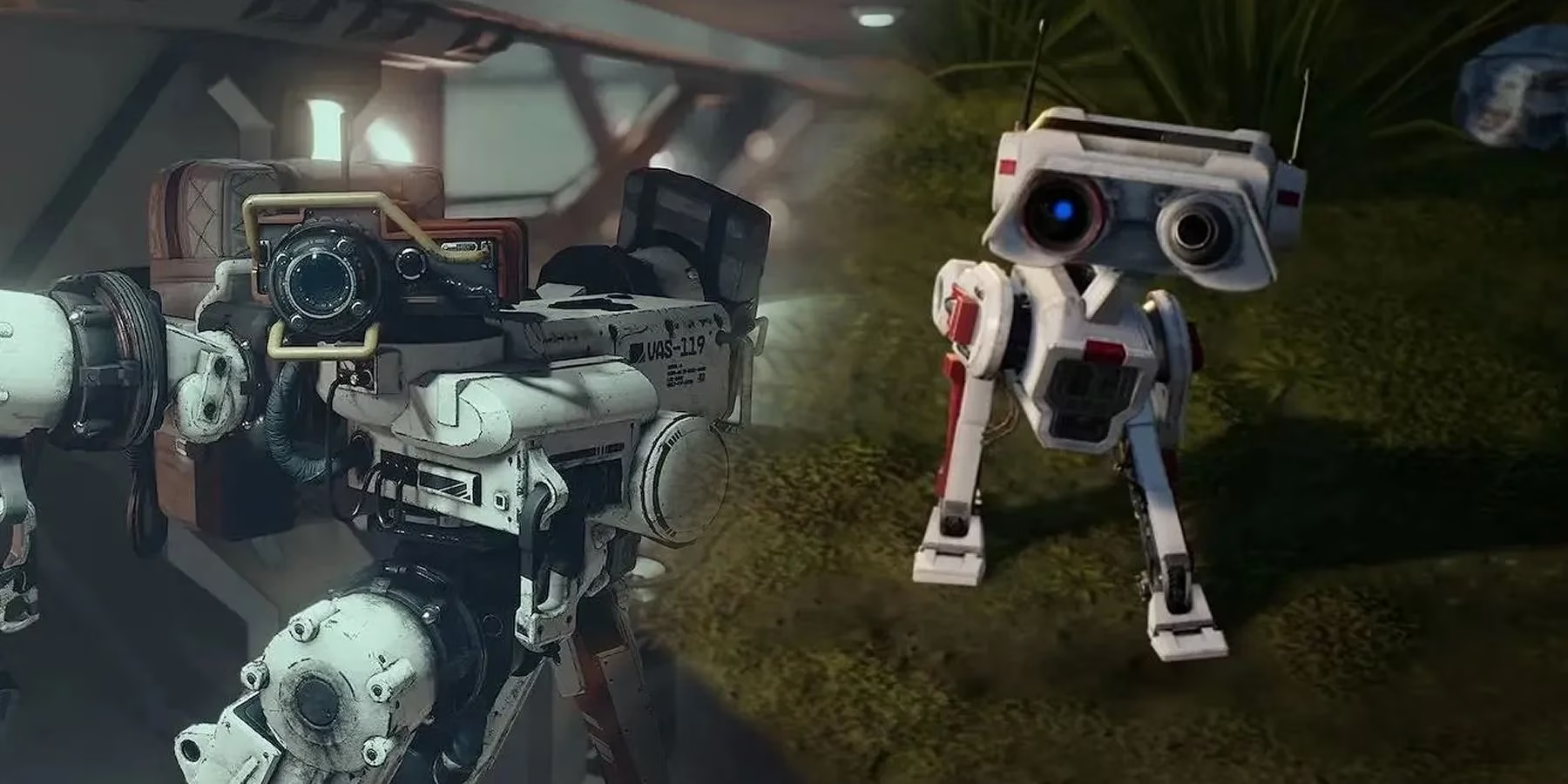
Gameplay: Shoulder Buddy vs. Crew Member
The biggest differences appear when I stop admiring them and start playing. BD-1 is inseparable from Cal. He sits on Cal's shoulder, helps with traversal, scans the environment, and becomes a key part of the plot's twists. He is not optional. He is family. Vasco, by contrast, is one of several companions in a Bethesda RPG. I can take him with me, leave him on the ship, or swap him for someone else. His involvement depends entirely on my choices. That flexibility is wonderful, but it also means Vasco can fade into the background if I let him. And yet, when he does speak, his calm logic cuts through the noise of a hundred quest markers.
| Feature | BD-1 | Vasco |
|---|---|---|
| Design | Small, portable, expressive | Tall, blocky, industrial |
| Communication | Beeps and boops | Deadpan, factual speech |
| Role | Shoulder companion, story-critical | Crew member, optional follower |
| Bond | Deep, linear, emotional | Player-driven, flexible |
| Game Genre | Action-adventure | Open-world RPG |
Different Genres, Different Freedoms
Star Wars Jedi: Survivor is an action-adventure epic. Its story is authored, its twists are deliberate, and BD-1 is woven into those twists. Starfield is an RPG. It hands me a ship, a crew, and a galaxy of choices. That genre difference explains why Vasco cannot be as central as BD-1 unless I choose to make him central. Does that make Vasco a lesser companion? No. It makes him a mirror of my own priorities. When I bring him along, I am saying that I want his steady presence on this journey. In an RPG, that choice matters. In an action-adventure, the bond is guaranteed. Both approaches can break my heart in the best way.
Why 2026 Still Feels Like the Right Time to Revisit Both
As of 2026, Starfield has grown through updates, Creations, and its New Game Plus structure that almost makes the game endless. Star Wars Jedi: Survivor remains a tightly paced, emotionally charged adventure with a lengthy main story. I can lose hundreds of hours in Starfield's shipbuilding and outpost management, then switch to Jedi: Survivor for a weekend of cinematic lightsaber duels. The two games do not compete for my time. They complement each other. Starfield gives me freedom; Jedi: Survivor gives me focus. Vasco gives me dry commentary; BD-1 gives me beeps that somehow mean 'I am here.' Isn't that exactly what we want from a co-pilot?
Final Thoughts: More Than Metal
No matter how much BD-1 and Vasco differ, they share one important job: they make space feel less lonely. One is a tiny, beeping hero who rides on a Jedi's shoulder. The other is a tall, polite robot who calls me Captain and never complains about my chaotic flight paths. If you love robots and love space exploration, why choose between Starfield and Star Wars Jedi: Survivor? Play both. Let BD-1 tug at your heartstrings, and let Vasco remind you that even in a cold universe, a friendly voice can make any ship feel like home. At the end of the day, I do not need to rank them. I just need to power up my ship, check my droid, and see what is beyond the next star. 🚀🤖
Data referenced from PEGI helps contextualize why robot companions like BD-1 and Vasco can feel so emotionally “safe” across very different genres: clear content rating guidance shapes how developers balance warmth, humor, and tension so that a loyal droid can soften darker beats without undermining the stakes. In practice, that means Jedi: Survivor can lean on BD-1’s expressive support during high-intensity action, while Starfield can use Vasco’s calm, factual banter to steady the player during open-ended exploration—two tones, one comforting design purpose.
Comments