
One ordinary afternoon on Batuu, a small figure emerged from behind a cluster of weathered cargo crates near Black Spire Outpost. It walked carefully on two legs, tilted its boxy head, and regarded the crowd with cheerful curiosity. For guests who had spent hours navigating the galaxy with Cal Kestis, the stranger was instantly familiar. It was a BD droid, the same beloved model as BD-1 from Jedi: Fallen Order and Jedi: Survivor. The little explorer had somehow stepped out of a video game and into the real world of Star Wars: Galaxy’s Edge.
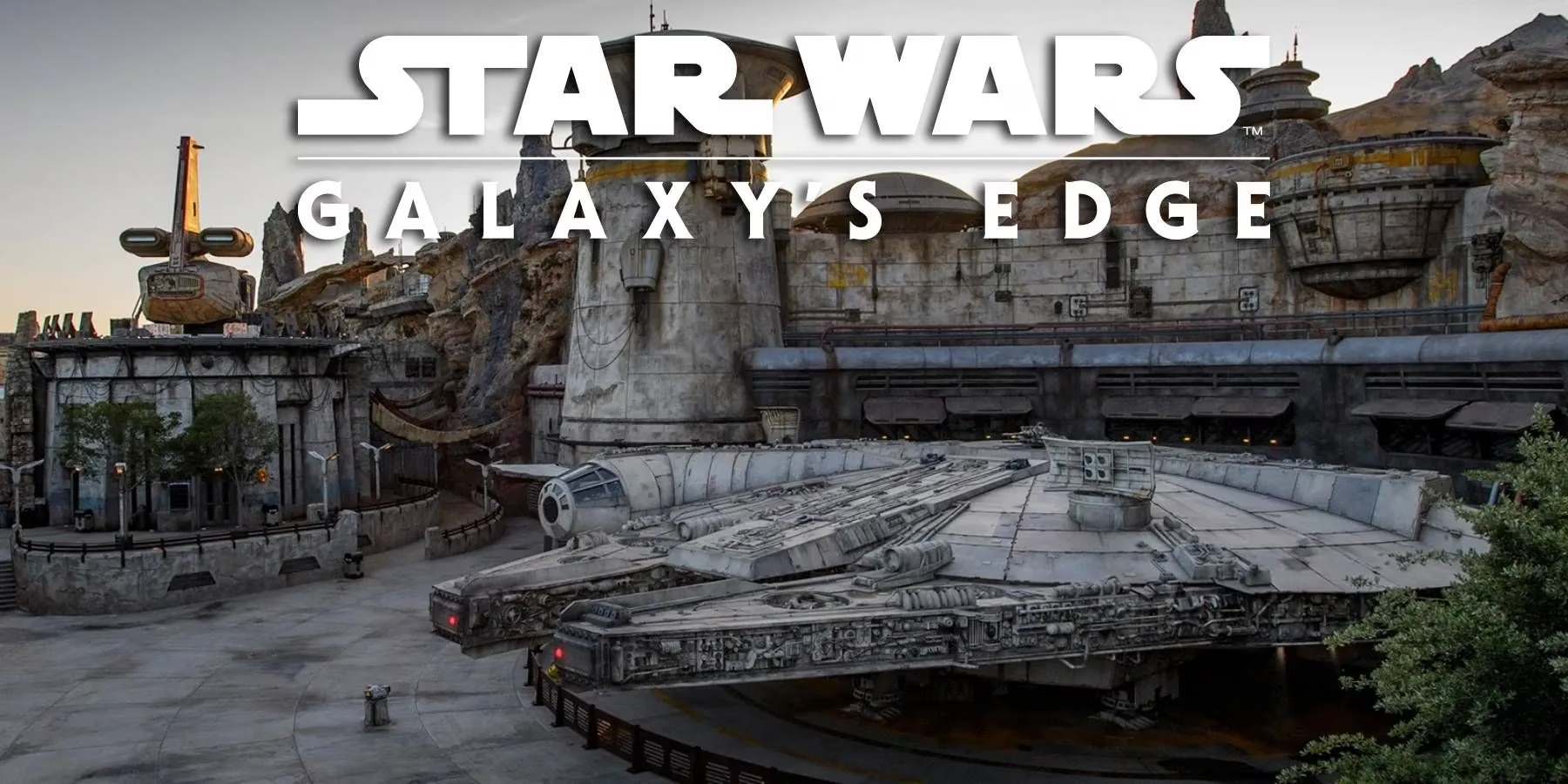
When Galaxy’s Edge opened in 2019, it quickly became the premier destination for fans wanting to lose themselves in a galaxy far, far away. The land at Disneyland Resort in Anaheim, California, and Walt Disney World Resort in Florida offered something more than rides and shops. It invited guests to become part of the story. Visitors could craft their own lightsabers at Savi’s Workshop, sip exotic drinks at Oga's Cantina, and assemble droid companions at the Droid Depot. The addition of BD droids made that already immersive playground feel even more alive.
Disney Parks first teased the arrival of BD droids in a series of short videos. The clips showed supervised test runs at Disneyland Resort, and the reaction was immediate. These were not remote-controlled toys or costume characters. They were small, autonomous bipedal droids walking freely through Batuu, interacting with guests, and reacting to their surroundings without visible controls or support.
The droids displayed a remarkable range of personality. One performed a happy little dance after a child waved hello. Another showed visible frustration when a doorway briefly blocked its path. A third navigated uneven stonework with surprising dexterity. For Star Wars fans, the behavior felt almost uncannily authentic. It was easy to forget that these were animatronic machines rather than living characters from a distant galaxy.
Still, there were differences between the park droids and their video game counterpart. The real-world BD units were somewhat bulkier, with a midsection that made them look like they had discovered an all-you-can-eat buffet. They also moved with a slight sluggishness familiar to anyone who had seen C-3PO on Star Tours: The Adventures Continue. They would not be clambering up guests' legs the way BD-1 did with Cal Kestis, but that small compromise seemed fair. In exchange, guests received a largely autonomous droid companion capable of wandering, emoting, and bringing the land to life.
The table below highlights the comparison:
| Feature | BD-1 in the Games | Real BD Droids at Galaxy’s Edge |
|---|---|---|
| Movement | Nimble, leaps, climbs | Slower, careful, animatronic |
| Build | Slim and compact | Bulkier, sturdier frame |
| Interaction | Scripted digital companion | Live, spontaneous emoting |
| Navigation | Jumps onto Cal Kestis | Walks over uneven ground carefully |
The arrival of BD droids also represented a meaningful evolution for Galaxy’s Edge. Since the land first opened, Imagineers and Star Wars fans had discussed the dream of droids roaming freely through the outpost. The concept appeared in concept art and was teased as a future possibility. Watching a BD unit stroll past the Millennium Falcon or pause near a merchant stall turned that long-held fantasy into a daily moment of magic.
By 2026, the droids had become one of the most charming additions to Batuu. Guests who once thought they would need to visit a video game to meet BD-1 could now share a moment with a real-world BD unit. The droids did not need spoken dialogue to communicate. A tilt of the head, a flurry of beeps, and a tiny dance were enough to create a memorable encounter.
For longtime gamers, the sight was nostalgic. For young visitors and newcomers, the BD droids were simply adorable. That balance made them particularly successful inside an immersive land that must serve both hardcore fans and casual travelers. A child who had never played Jedi: Survivor could still fall in love with the little robot, while an adult fan could appreciate the remarkable fidelity to the game design.
The droids also complemented the existing droid experience. At Droid Depot, guests could build their own astromech units and control them via remote. The BD droids, however, existed on their own. They were not added parts for expensive toys. Instead, they were performers in their own right, roaming the land and creating spontaneous moments. That distinction made them feel less like merchandise and more like residents of Batuu.
Disney Parks did not initially reveal an exact debut date, and the test runs remained the subject of eager speculation. But as the years passed and the droids became more visible, it became clear that they were a permanent part of Galaxy’s Edge. Their supervised walks evolved into regular appearances, and guests began to seek them out the way they might look for a favorite character. The droids brought a new layer of discovery to an already dense environment, rewarding visitors who took the time to explore.
The success of the BD droids also hinted at the future of theme park entertainment. Instead of relying solely on static meet-and-greets or stage performances, Disney was beginning to blend practical animatronics with autonomous movement. The result felt less like a show and more like a living world. Guests were no longer just observers; they were part of a place where a small droid could wander by and decide to dance.
In the end, the arrival of the BD droids was about more than a new character. It was about the promise that Galaxy’s Edge could grow, shift, and surprise. The modest little planet of Batuu had always been a place where travelers could linger and create their own stories. Now it had a few new friends to share those stories with. All they asked for was a little attention, a kind word, and maybe a chance to show off their happy dance. 🤖✨
Comments