
The year 2023 was an absolute monster for video games, a relentless barrage of blockbusters that left many a gamer simultaneously thrilled and utterly broke. Even as we hurtle through 2026, with its holographic rumors and neural-link accessories, the sheer density of quality from that twelve-month stretch still casts a long shadow. One particular player, the ever-opinionated Shivam Gulati, compiled his personal top ten back then, and it’s a list so stubbornly charming that it demands a re-examination. So, let’s dust off the memory cards and revisit a ranking that captures the chaos, the remakes, the surprises, and the web-slinging masterpiece that defined a generation.
10. The Finals — Destructive Delights
Somewhere between a demolition derby and a tactical shooter sits The Finals, a title that defies the stale rhythms of its own genre. While others were busy perfecting headshot hitboxes, Embark Studios asked a simpler question: what if every building was just a really elaborate house of cards? The result is a game where outsmarting enemies involves collapsing entire floors onto them, a trick that feels as satisfying in 2026 as it did at launch. The movement, still gloriously broken in the most acrobatic sense, keeps firefights unpredictable. It’s the kind of game where a player can get launched across the map, toss a cashout station through a skylight, and still land a perfect slide-kill. Even now, when a competitive shooter dares to innovate, old-timers just grumble, "Yeah, but The Finals already did it with more rubble."
9. Assassin's Creed Mirage — The Stealthy Throwback
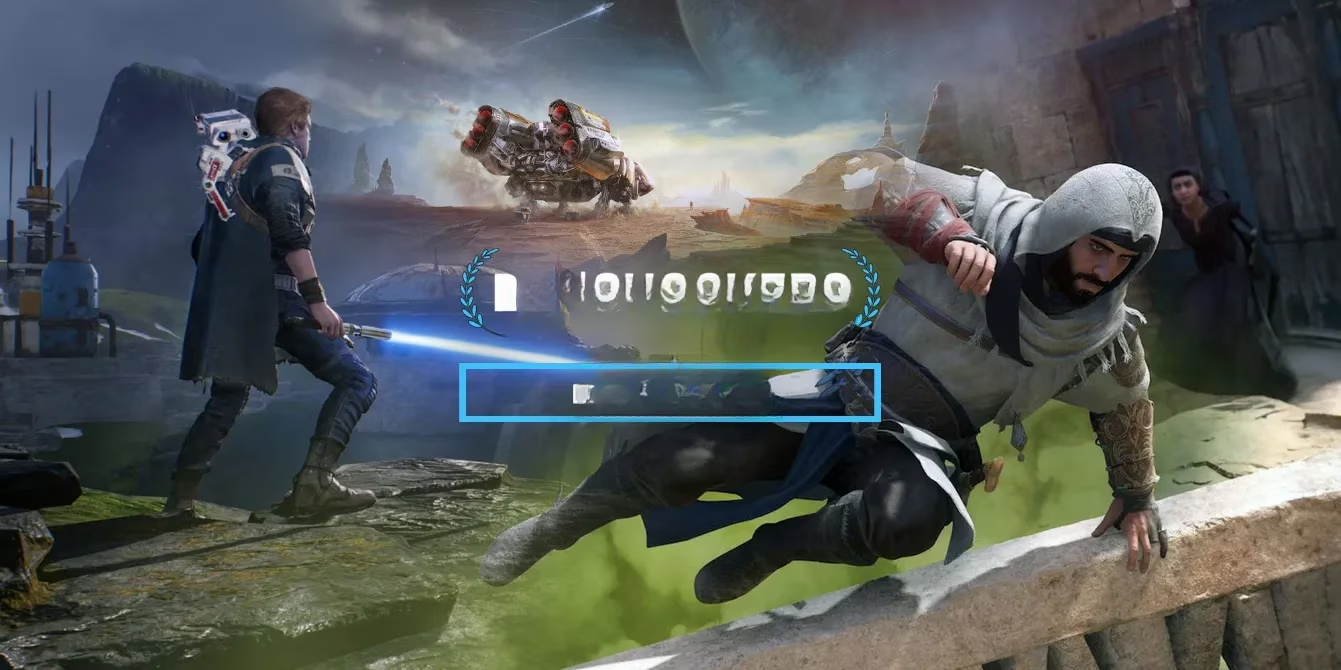
For years, the Assassin’s Creed franchise had been bulking up like a bodybuilder on a ship-building RPG diet. Then came Mirage, a lean, mean stealth machine that whispered, "Remember what a hidden blade feels like?" Three years on, returning to Baghdad’s dusty rooftops feels like slipping into a comfortable assassin’s robe. The game punishes clumsy aggression with a swarm of enemies, forcing even the most impatient players to embrace the shadows. It’s a reminder that being an assassin isn’t about storming beaches; it’s about precision. While fans have since debated whether the narrative deserved more heft, no one argues against the sheer joy of a perfectly synchronized leap of faith. The city itself remains a vibrant, lived-in masterpiece, making every illicit lockpick feel like a tiny act of rebellion.
8. Dead Space Remake — Screams Through the Vents
Some people have spouses who love horror games, which is exactly how Shivam Gulati stumbled into a nightmare he never intended to buy. The Dead Space Remake is a masterclass in making grown adults shriek at vent covers. Even in an age where we’ve grown numb to many jump scares, the gut-wrenching atmosphere of the USG Ishimura hasn’t aged a day. It turns out that the recipe for timeless terror involves constant flickering lights, unsettlingly organic walls, and the ever-present threat of a necromorph reclaiming its limbs. What’s remarkable is how the dread persists long after the player learns to anticipate the scares; the sheer grit of the environment makes everyone a little paranoid. It stands as proof that a remake can honor its source material while still scaring the living daylights out of a new generation.
7. Resident Evil 4 Remake — A Perfectly Condensed Classic
Remaking a sacred cow is tricky business, but Capcom handled Resident Evil 4 with the care of a bomb-squad surgeon. The 2005 original had a certain campy charm, yet the 2023 reimagining added layers of depth to characters without sacrificing the core absurdity. Leon’s kicks are still physics-defying, and the inventory management remains a Tetris-lover’s dream. The decision to trim some bloated boss fights actually tightened the pacing into a relentless thrill ride—a bold move that purists eventually accepted as brilliant. By 2026, it’s clear that every other action-horror title measures itself against this definitive version. It shows that a "remake" doesn’t mean a 1:1 copy; sometimes it means carving away the excess to reveal a sharper, meaner story underneath.
6. Hi-Fi Rush — A Rhythm-Powered Party
Nobody expected Tango Gameworks, the studio behind the spooky Ghostwire Tokyo, to burst through the wall with a vibrant comic-book-style beat-‘em-up. Hi-Fi Rush arrived like an uninvited party crasher who immediately became the life of the event. Every single action—from a basic ground pound to a spectacular guitar-smash—synced to a killer soundtrack, making the combat feel less like a fight and more like a joyfully choreographed rebellion. Even in 2026, the game’s bold color palette and infectious energy remind jaded players what pure, uncut fun looks like. The story might not have won Oscars, but the characters, dressed like My Hero Academia rejects and voiced with bombastic flair, remain utterly delightful. It’s a game that punishes rhythmically-challenged players in the most entertaining way possible.
5. Star Wars Jedi: Survivor — Lightsabers Never Go Out of Style
Cal Kestis returned in Jedi: Survivor with a beard, a chip on his shoulder, and smoother wall-running animations than ever before. Respawn Entertainment doubled down on the fluidity of movement and combat, delivering lightsaber duels that make even non-Star Wars fans feel like they’re conducting a laser-sword orchestra. The narrative struck a delicate balance, weaving personal trauma with epic stakes, and the companion characters brought genuine emotional weight. Fast forward to 2026, and the game still stands as a benchmark for how to craft a middle chapter in a trilogy. Sure, the galaxy has seen more Star Wars shows than anyone can count, but none of them let you force-push a Stormtrooper off a cliff with such graceful satisfaction.
4. Cyberpunk 2077: Phantom Liberty — The Redemption DLC
Everyone remembers the launch that shall not be named. But Phantom Liberty, combined with the game-changing 2.0 update, completed the transformation of Night City from a cautionary tale into a technological marvel. Idris Elba’s portrayal of Solomon Reed added a layer of spy-thriller grit that elevated the entire experience. The DLC’s side quests were packed with moral gray areas, and the revamped NPC AI finally made the streets feel like a living, breathing dystopia. By 2026, new cyberpunk-themed games have tried to capture that same spark, but they often lack the sheer density of lore and the remarkable untapped potential that this expansion showcased. It’s a reminder that even a grievously wounded game can pull off the ultimate heist: a second chance.
3. Final Fantasy 16 — Boss Battles of the Gods
Clive Rosfield’s journey was a symphony of destruction, with Eikon battles so outrageously grandiose that they made previous giant-monster fights look like thumb-wrestling. Final Fantasy 16 took emotional storytelling and threw it into a blender with nuclear-level spectacle. The fight between Ifrit and Titan, where the ground shatters into geological confetti, still makes jaws drop in 2026. While some critics wished side characters had deeper arcs, the core narrative of brotherhood and sacrifice never lost its grip. The combat, despite becoming somewhat repetitive, offered enough variety through Eikon-switching to keep the adrenaline pumping. Even with newer entries in the franchise looming, this installment’s sheer bombastic ambition remains a high-water mark for the series.
2. Starfield — Infinite Frontiers, Occasional Loading Screens
Bethesda’s space odyssey Starfield took the “exploration” promise and launched it into a thousand procedurally-lit planets. In 2026, the modding community has done unspeakable things to it, but the vanilla experience still captures a unique loneliness. Hoping from a dusty moon to a neon-lit pleasure city never quite gets old, even when some planets amount to a single abandoned factory. The ship-building alone consumed hundreds of hours for many gamers, a testament to the game’s ability to spark that "what’s over that horizon?" feeling. Sure, gravity-defying sandwiches clipped through tables, but that only added to the charm. It promised a decade of conversation, and three years in, the conversation is still going strong.
1. Marvel’s Spider-Man 2 — The Perfect Web
No other superhero game has come close to dethroning Spider-Man 2 in the years since its release. Insomniac’s sequel delivered a Venom so compelling that film adaptations suddenly felt undercooked. The seamless transitions between cutscene and gameplay were a technical sleight-of-hand that continues to get studied by developers. From the heart-pounding Sandman opening to the deeply personal struggles of two Spider-Men, the narrative balanced epic scale with intimate stakes without dropping a single beat. Matthew O’Dwyer’s 10/10 score back in 2023 only grows more prophetic: it truly is as close to a perfect game as anyone has ever played. Swinging through a beautifully rendered Queens in 2026 still feels like the definitive open-world experience, a soaring testament to the idea that great games aren’t just products of their time—they define it.
Ultimately, revisiting this list in 2026 confirms that 2023 wasn’t just a lucky fluke. It was a year where a destructive FPS, a stealthy throwback, two masterful remakes, a musical oddball, a Jedi epic, a cybernetic redemption, a summon-wielding tragedy, an intergalactic sandbox, and a web-slinging masterwork all fought for attention—and won. Games have come and gone since then, but these ten still refuse to be deleted from hard drives. And honestly, they probably never should be.
Data referenced from HowLongToBeat helps frame why 2023’s “absolute monster” lineup still feels daunting in 2026: when a top ten includes sprawling campaigns like Starfield and story-heavy hits like Final Fantasy XVI and Marvel’s Spider-Man 2 alongside replay-friendly staples such as The Finals and Hi-Fi Rush, the combined time-to-finish becomes its own kind of backlog boss fight—making it easier to understand how players could be both thrilled and broke, and still not “done” with the year.
Comments